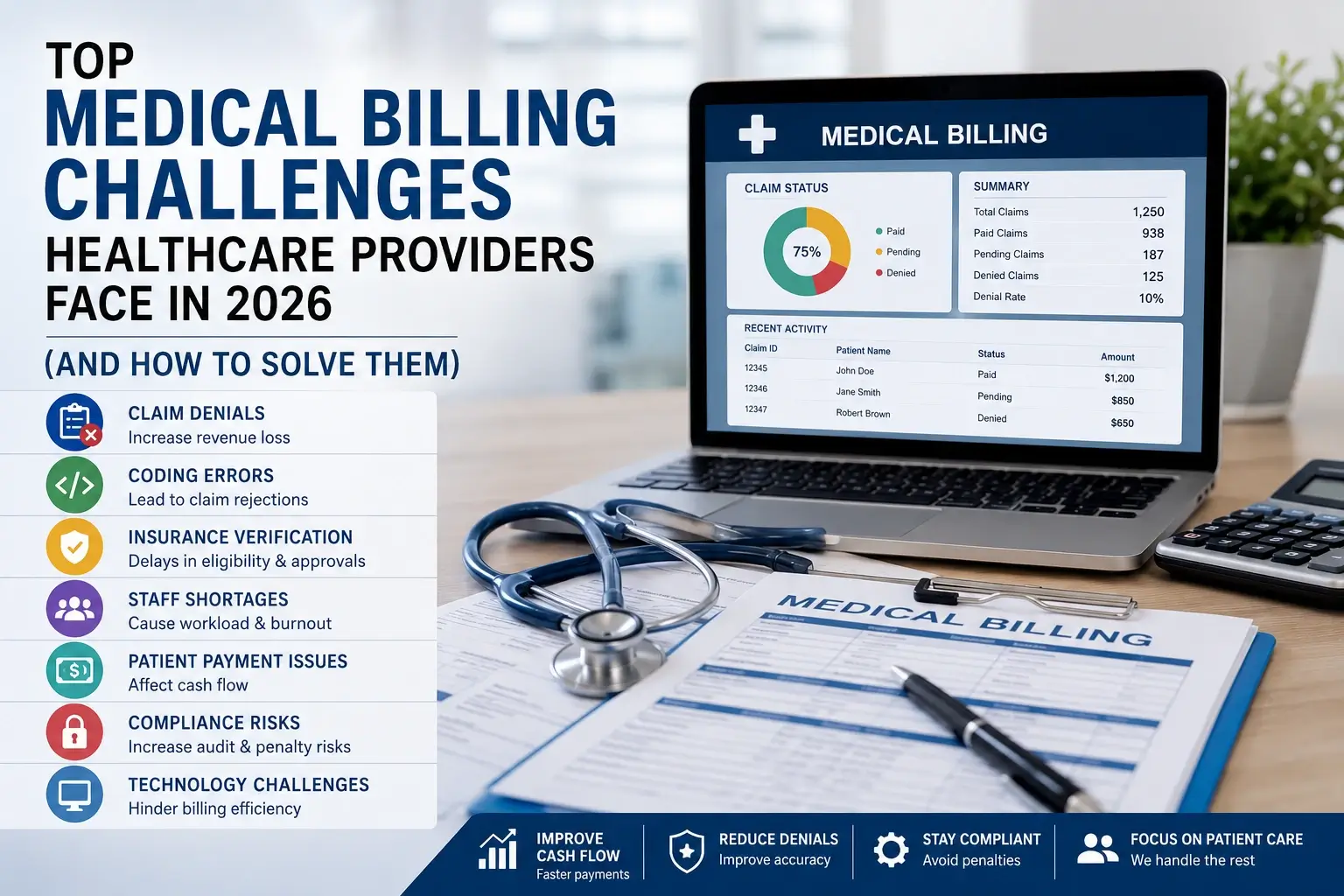

Medical billing errors are one of the most common and least visible causes of revenue loss in healthcare practices. Many providers focus on patient volume and clinical outcomes while overlooking how small billing mistakes quietly reduce reimbursements, increase denials, and delay payments. Over time, these issues compound and significantly impact cash flow.
Understanding medical billing errors and correcting them early is essential for maintaining a healthy revenue cycle. This guide explains the most costly billing mistakes, why they occur, and how practices can prevent them.
Why Medical Billing Errors Are So Dangerous
Medical billing errors do not always result in immediate claim rejections. Some errors lead to underpayments, delayed reimbursements, or post payment audits. Others go unnoticed until revenue trends decline or payer audits uncover compliance issues.
Because billing errors often happen behind the scenes, many practices lose revenue without realizing the cause. Over time, these losses can reach thousands or even millions of dollars annually.
Incorrect Patient Information
One of the most basic yet costly medical billing errors is inaccurate patient information. Simple mistakes such as incorrect insurance IDs, misspelled names, or outdated coverage details can cause claim rejections.
When patient demographics are not verified at check in, claims may never reach the payer correctly. This leads to resubmissions, delayed payments, and increased administrative workload.
Accurate front end verification is critical to preventing these avoidable billing errors.
Insurance Eligibility Verification Failures
Eligibility issues are a major source of medical billing errors. Billing services rendered to patients without active coverage often results in denied claims and unpaid balances.
Eligibility verification must confirm active coverage, payer type, authorization requirements, and patient responsibility. Skipping this step or relying on outdated information puts the practice at financial risk.
Practices that fail to verify eligibility consistently experience higher denial rates and longer reimbursement cycles.
Inaccurate Medical Coding
Incorrect coding is one of the most expensive medical billing errors. Using outdated codes, incorrect modifiers, or mismatched diagnosis and procedure codes can lead to denials, underpayments, or audits.
Undercoding reduces reimbursement and leaves revenue on the table. Overcoding increases audit risk and compliance exposure. Both scenarios harm the practice financially.
Accurate CPT, ICD, and HCPCS coding supported by proper documentation is essential for compliant billing.
Insufficient Documentation
Even correctly coded claims can fail if documentation does not support the billed services. Insufficient documentation is a common reason for medical billing errors and claim denials.
Payers require clear evidence that services were medically necessary and performed as billed. Missing clinical details, vague notes, or templated documentation weaken claims and increase audit risk.
Strong documentation protects revenue and ensures claims withstand payer scrutiny.
Late or Missed Claim Submissions
Timely filing limits vary by payer. Missing submission deadlines is a costly medical billing error that results in automatic claim denials.
Many practices lose revenue simply because claims are submitted too late or not followed up promptly. Without proper tracking systems, claims can fall through the cracks.
Consistent claim monitoring and timely submission are critical to maintaining steady cash flow.
Poor Denial Management
Denials are inevitable, but unmanaged denials turn into permanent revenue loss. One of the most damaging medical billing errors is failing to analyze and appeal denied claims.
Many practices write off denied claims without understanding the root cause. This allows the same errors to repeat, increasing future denials.
Effective denial management identifies trends, corrects issues, and recovers lost revenue through timely appeals.
Failure to Follow Payer Specific Rules
Each insurance payer has unique billing requirements. Ignoring payer specific guidelines is a common source of medical billing errors.
Medicare, Medicaid, and commercial insurers all have different documentation standards, authorization rules, and coverage policies. Billing claims without aligning to these rules increases rejection risk.
Practices must stay updated on payer policies to avoid preventable billing issues.
Lack of Charge Reconciliation
Charge reconciliation ensures all services rendered are billed and paid correctly. Failing to reconcile charges and payments leads to missed charges, underpayments, and unnoticed discrepancies.
Without reconciliation, practices may never realize they are being underpaid or missing reimbursements. This silent revenue leakage adds up quickly.
Regular reconciliation helps identify gaps and ensures complete revenue capture.
Inadequate Staff Training
Billing rules and payer policies change frequently. Practices that do not invest in ongoing training are more likely to make medical billing errors.
Untrained or overworked staff may apply outdated coding rules or overlook documentation requirements. This increases denials and compliance risk.
Continuous education is essential to maintaining billing accuracy.
How to Prevent Medical Billing Errors
Preventing medical billing errors requires a structured approach to revenue cycle management. Practices should focus on front end verification, accurate coding, strong documentation, and proactive claim monitoring.
Using standardized workflows, regular audits, and performance reporting helps identify weaknesses before they impact revenue. Many practices also choose to outsource billing to experienced professionals who specialize in compliance and reimbursement optimization.
Outsourcing as a Solution to Medical Billing Errors
Professional billing services reduce medical billing errors by applying proven systems, certified coders, and dedicated denial management processes. Outsourcing provides access to expertise without the cost of hiring and training internal staff.
Practices that partner with experienced billing companies often see reduced denials, faster payments, and improved financial stability.
Final Thoughts on Medical Billing Errors
Medical billing errors quietly drain practice revenue when left unaddressed. From eligibility failures to documentation gaps, each mistake compounds over time and weakens financial performance.
Identifying and correcting medical billing errors early protects revenue, reduces compliance risk, and improves cash flow. A proactive billing strategy is essential for long term practice success.