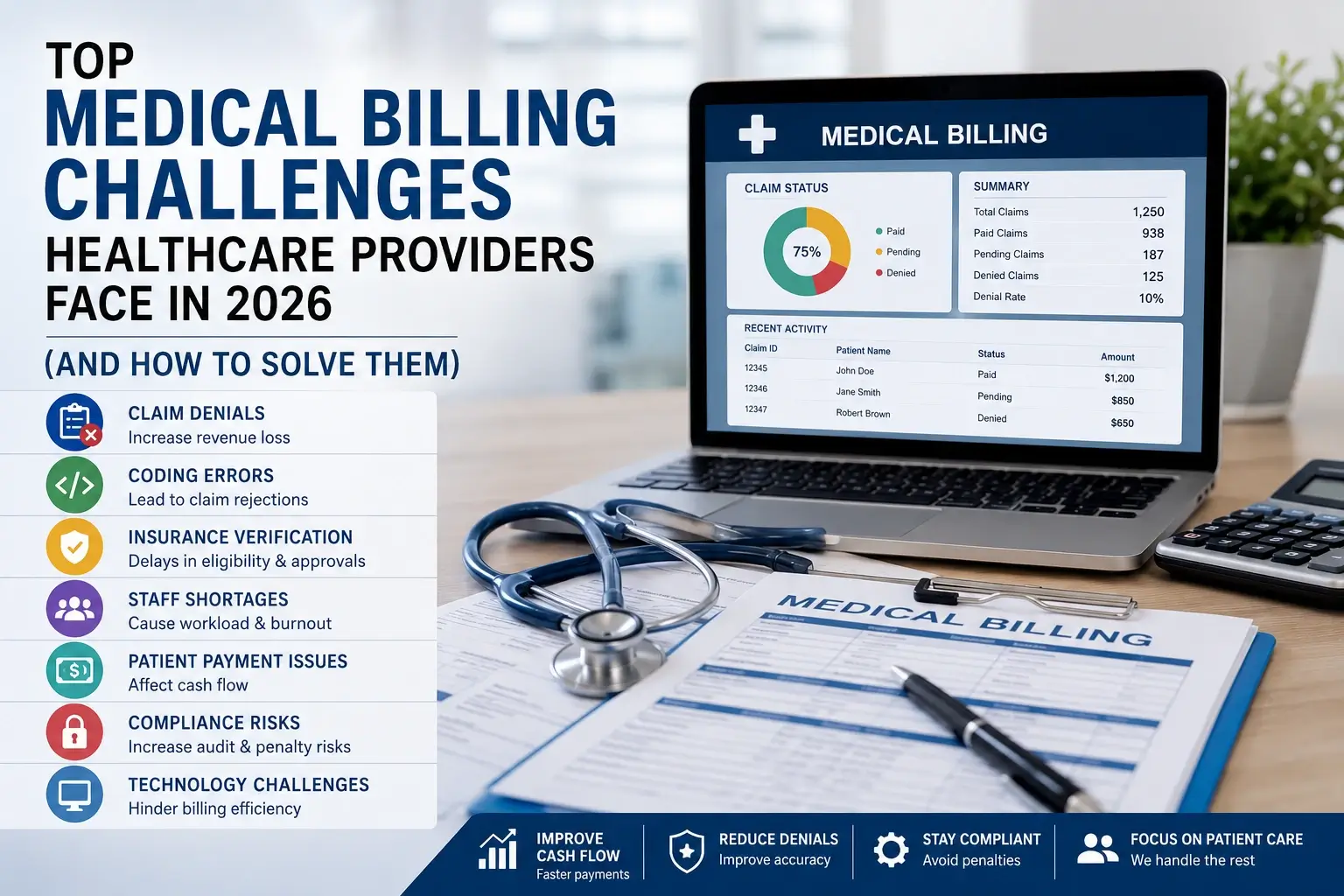

Choosing between medical billing services vs in house billing is one of the most important financial decisions a healthcare practice can make. Billing directly affects cash flow, compliance, staff workload, and long term profitability. Many practices assume in house billing gives them more control, while others believe outsourcing automatically saves money. The reality is more nuanced.
This guide breaks down the real costs, operational risks, and financial outcomes of medical billing services vs in house billing so providers can make an informed decision based on facts, not assumptions.
Understanding In House Medical Billing
In house billing means the practice manages all billing activities internally using employed staff. This includes insurance verification, coding, claim submission, denial management, payment posting, and patient billing.
At first glance, in house billing appears straightforward. The practice controls staff, workflows, and communication. However, this control comes with hidden costs and operational risks that many practices underestimate.
In house billing requires continuous staff training, investment in billing software, and constant monitoring of payer rules. Any disruption, such as staff turnover or policy changes, can directly impact revenue.
What Medical Billing Services Actually Do
Medical billing services handle the entire revenue cycle or specific billing functions on behalf of healthcare providers. These services use dedicated billing teams, certified coders, and standardized workflows to manage claims efficiently.
When comparing medical billing services vs in house billing, it is important to understand that outsourcing does not mean loss of control. Instead, it shifts billing responsibilities to specialists whose sole focus is reimbursement accuracy and compliance.
Professional billing services manage eligibility checks, coding, claim tracking, denial appeals, and reporting while coordinating closely with the practice.
Cost Comparison: Medical Billing Services vs In House Billing
Cost is often the primary factor when comparing medical billing services vs in house billing. However, many practices only consider visible expenses and overlook indirect costs.
In house billing costs include salaries, benefits, payroll taxes, training, software licensing, system upgrades, and staff turnover. Even a small billing team can represent a significant fixed expense.
Medical billing services typically charge a percentage of collections or a flat fee. While this appears costly upfront, it converts fixed expenses into performance based costs. Practices only pay for results.
When all expenses are considered, many practices find outsourced billing more cost effective than maintaining an internal billing department.
Staffing Challenges and Turnover Risk
Staffing is one of the biggest risks of in house billing. Billing staff require specialized knowledge and constant training. When experienced billers leave, revenue often suffers.
Replacing billing staff is expensive and time consuming. New hires require onboarding and training, during which claim errors and delays increase.
Medical billing services eliminate this risk. Teams are already trained, scalable, and not dependent on one individual. This stability is a major advantage when evaluating medical billing services vs in house billing.
Accuracy and Claim Denial Rates
Billing accuracy directly affects revenue. In house teams often juggle multiple responsibilities, increasing the likelihood of errors.
Medical billing services use standardized quality checks and payer specific rules to reduce errors before claims are submitted. This improves first pass claim acceptance rates and reduces denials.
When comparing medical billing services vs in house billing, outsourced billing consistently shows lower denial rates and faster reimbursements due to specialization and volume based expertise.
Compliance and Audit Exposure
Healthcare billing regulations change frequently. Medicare, Medicaid, and commercial payers regularly update documentation and coding requirements.
In house teams may struggle to keep up with these changes, increasing audit risk. Compliance failures can lead to penalties, recoupments, or payer investigations.
Medical billing services prioritize compliance as a core function. Dedicated teams track regulatory updates, monitor coding patterns, and ensure documentation supports billed services.
From a risk management perspective, medical billing services offer stronger compliance protection than most in house billing teams.
Impact on Cash Flow and Revenue Consistency
Cash flow stability is a key outcome when comparing medical billing services vs in house billing. In house billing performance often fluctuates due to staffing issues, workload spikes, or process gaps.
Medical billing services follow consistent workflows, aggressive claim follow ups, and denial resolution strategies. This results in shorter accounts receivable cycles and more predictable monthly revenue.
Practices that outsource billing often experience faster payments and improved financial forecasting.
Scalability and Practice Growth
As practices grow, billing complexity increases. More providers, locations, and payer contracts place additional strain on in house teams.
Scaling in house billing requires hiring more staff, increasing overhead, and managing larger teams. This growth model is costly and difficult to manage.
Medical billing services scale seamlessly. Billing capacity expands as practice volume increases without additional hiring or infrastructure investment.
Scalability is a major advantage when comparing medical billing services vs in house billing for growing practices.
Reporting and Financial Transparency
Many in house billing systems provide limited reporting. Practices may struggle to identify denial trends, payer issues, or revenue leaks.
Medical billing services offer detailed financial reports, denial analysis, and performance metrics. These insights allow practices to make data driven decisions and improve operations.
Better reporting leads to better financial control.
Control and Communication Concerns
A common concern about outsourcing is loss of control. In reality, reputable medical billing services operate as extensions of the practice.
Clear communication, regular reporting, and defined workflows maintain transparency. Practices retain oversight while eliminating daily administrative burdens.
When properly managed, medical billing services vs in house billing is not a control issue but an efficiency decision.
Which Option Is Right for Your Practice
There is no universal answer. Small practices with limited volume may manage in house billing effectively. However, practices facing frequent denials, delayed payments, staffing issues, or compliance concerns often benefit from outsourcing.
Medical billing services are particularly valuable for specialty clinics, behavioral health providers, and multi location practices where billing complexity is higher.
Final Thoughts on Medical Billing Services vs In House Billing
The decision between medical billing services vs in house billing should be based on total cost, risk exposure, and revenue performance, not assumptions.
In house billing offers control but comes with hidden costs and operational risks. Medical billing services provide expertise, scalability, compliance protection, and improved cash flow.
Practices that prioritize long term financial stability often find that outsourcing billing is not just a cost saving measure but a strategic investment.