
Medical billing services for small practices are becoming essential for clinics struggling with claim denials, delayed reimbursements, and rising administrative costs. For many small healthcare providers, outsourcing billing is no longer optional — it is a strategic decision to improve revenue cycle management and financial stability.
This is why many providers are turning to medical billing services for small practices to improve revenue, reduce denials, and stabilize cash flow.
But is outsourcing truly worth it? Let’s explore the ROI, potential risks, and the real financial impact.
Why Small Practices Struggle with In-House Billing
Unlike large hospitals, small clinics operate without a dedicated revenue cycle management department. Billing responsibilities often fall on front-desk staff who are already handling patient scheduling and documentation.
Common issues include:
- High claim denial rates
- Coding errors
- Delayed reimbursements
- Poor denial management
- Compliance risks
- Increasing accounts receivable (AR days)
Even minor billing errors can lead to rejected claims and delayed insurance reimbursement. Over time, this reduces profitability and creates cash flow instability.
What Are Medical Billing Services for Small Practices?
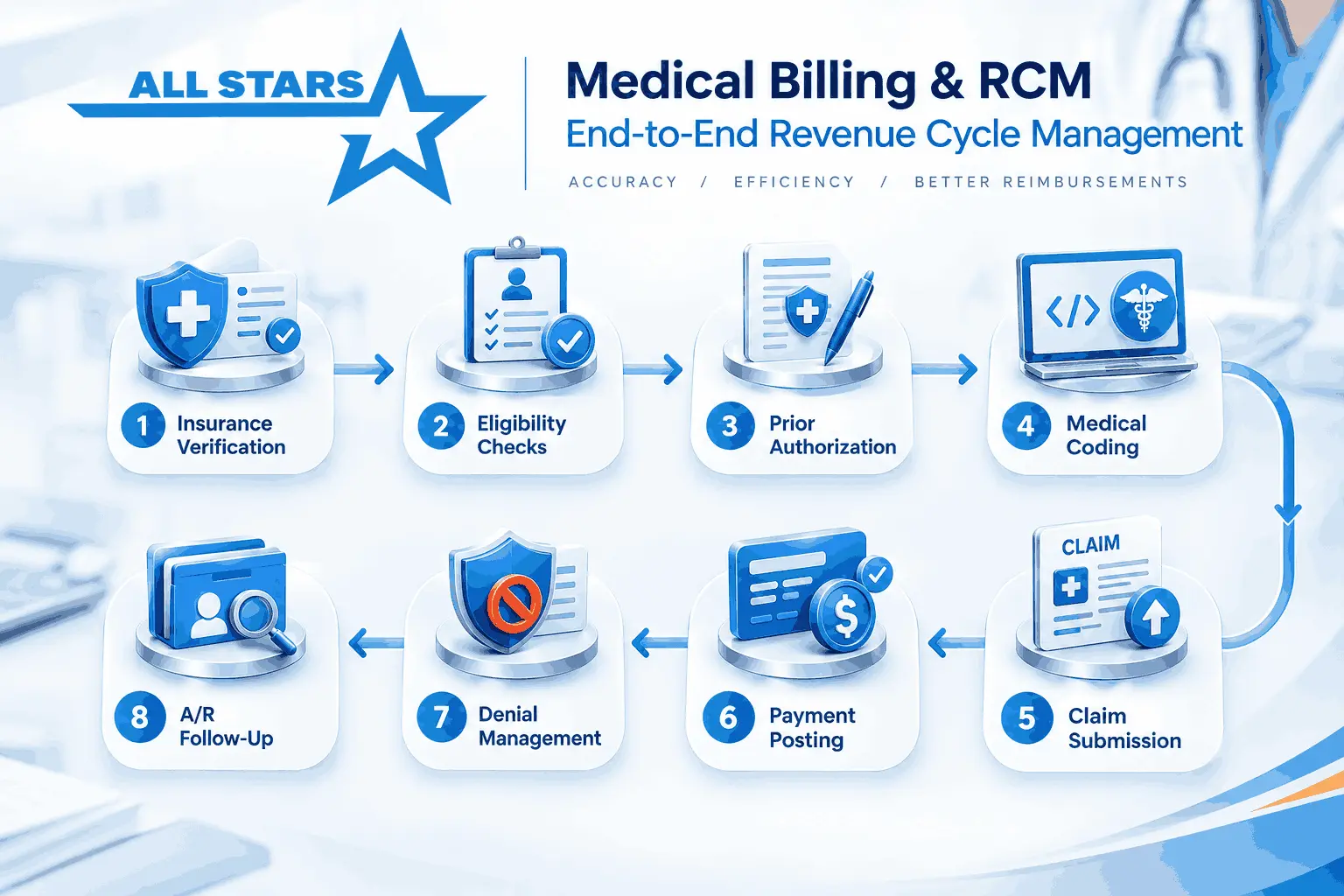
Medical billing services for small practices involve outsourcing billing operations to specialized professionals who manage:
- Claim submission
- Payment posting
- Insurance follow-ups
- Denial management
- Coding compliance
- Patient billing
- Accounts receivable recovery
These services focus on improving claim accuracy and optimizing healthcare revenue cycles.
For small clinics, outsourcing billing allows physicians to focus on patient care instead of administrative paperwork.
The ROI of Medical Billing Services for Small Practices
Return on investment (ROI) is the biggest concern for small practice owners. Let’s break down the financial benefits.
1. Increased Revenue Collection
Professional billing companies improve clean claim rates by ensuring accurate coding and documentation. This reduces rejected claims and accelerates reimbursement cycles.
Many small clinics report a 5–15% increase in collections after outsourcing.
2. Reduced Claim Denials
Denial management requires expertise and constant monitoring. Outsourced billing providers analyze denial patterns and prevent recurring errors.
Fewer denials directly translate to higher monthly revenue.
3. Lower Staffing Costs
Hiring in-house billing staff includes:
- Salaries
- Benefits
- Ongoing training
- Billing software costs
- Compliance monitoring
By outsourcing medical billing services for small practices, clinics convert fixed staffing expenses into a performance-based service fee.
4. Faster Cash Flow
Outsourcing improves accounts receivable cycles by:
- Submitting claims promptly
- Following up consistently
- Reducing aging AR days
Improved cash flow strengthens financial stability and supports practice growth.
Risks of Outsourcing Medical Billing
While medical billing services for small practices offer clear benefits, certain risks must be considered.
1. Data Security & HIPAA Compliance
Patient data privacy is critical. Always choose a HIPAA-compliant billing provider with secure encryption protocols.
2. Loss of Direct Oversight
Some providers worry about losing control over billing operations. The solution is choosing a partner that offers:
- Transparent reporting
- Real-time dashboards
- Monthly performance reviews
3. Hidden Fees
Some billing companies charge additional fees for:
- Credentialing
- Patient statements
- Software integration
Always request a clear pricing structure.
Cost Analysis: Is It Financially Worth It?
Most medical billing services for small practices charge between 4% to 9% of monthly collections.
When comparing costs, consider:
- Current denial rate
- AR days over 45+
- Lost revenue from billing errors
- Administrative burden
In many cases, the improved revenue cycle performance outweighs outsourcing fees.
The real financial reality is not just about cost — it’s about improved profitability and reduced operational stress.
When Should Small Practices Outsource Billing?
Outsourcing makes sense if:
- Your denial rate exceeds industry benchmarks
- Staff struggles with coding updates
- Cash flow is inconsistent
- AR days are increasing
- You plan to scale your clinic
If your practice already has a high-performing in-house billing team, ROI may be lower.
A billing performance audit can help determine whether outsourcing is the right move.
How to Choose the Right Billing Partner
When evaluating medical billing services for small practices, look for:
- Experience with small clinics
- Specialty-specific coding knowledge
- Transparent pricing
- Strong denial management system
- HIPAA compliance certification
- Detailed performance reporting
A reliable revenue cycle management partner should act as an extension of your clinic.
FAQs: Medical Billing Services for Small Practices
Is outsourcing medical billing worth it for small practices?
Yes, if your clinic struggles with high denial rates, delayed reimbursements, or administrative overload, outsourcing can significantly improve revenue and efficiency.
How much do medical billing services cost?
Typically between 4% and 9% of collections, depending on specialty and claim volume.
Can outsourcing reduce claim denials?
Yes. Professional billing companies specialize in claim accuracy and denial management, reducing rejection rates.
Is patient data safe with outsourced billing?
Reputable companies follow strict HIPAA compliance standards to protect patient information.
Conclusion: ROI, Risks, and Reality
Medical billing services for small practices are not just an operational convenience — they are a financial strategy.
When implemented correctly, outsourcing can:
- Increase revenue
- Reduce claim denials
- Improve cash flow
- Ensure compliance
- Minimize administrative burden
However, success depends on selecting the right partner and monitoring performance consistently.
For small clinics aiming to improve revenue cycle management and focus on patient care, outsourcing medical billing may be a strategic investment rather than an expense.