Understanding how to correctly use Revenue Code 0119 is essential for hospitals and inpatient facilities. This code is commonly used for private room billing, but most facilities use it incorrectly, which leads to compliance issues, claim denials, and underpayment.
If your organization wants clean claims, accurate room-and-board billing, and maximum reimbursements, you need to know exactly how Revenue Code 0119 should be applied, when it’s appropriate, and what documentation supports it.
This guide explains everything including common mistakes, compliance rules, and how to avoid denials.
What Is Revenue Code 0119?
Revenue Code 0119 is used in UB-04 (CMS-1450) billing to represent Private Room – Other.
It falls under the broader revenue code category 011X, which covers “Room and Board” services.
Revenue Code 011X Breakdown
- 0110: General Classification
- 0111: Medical/Surgical
- 0112: OB
- 0113: Pediatric
- 0114: Psychiatric
- 0115: Rehabilitation
- 0116: Detoxification
- 0118: Trauma
- 0119: Private Room – Other (miscellaneous)
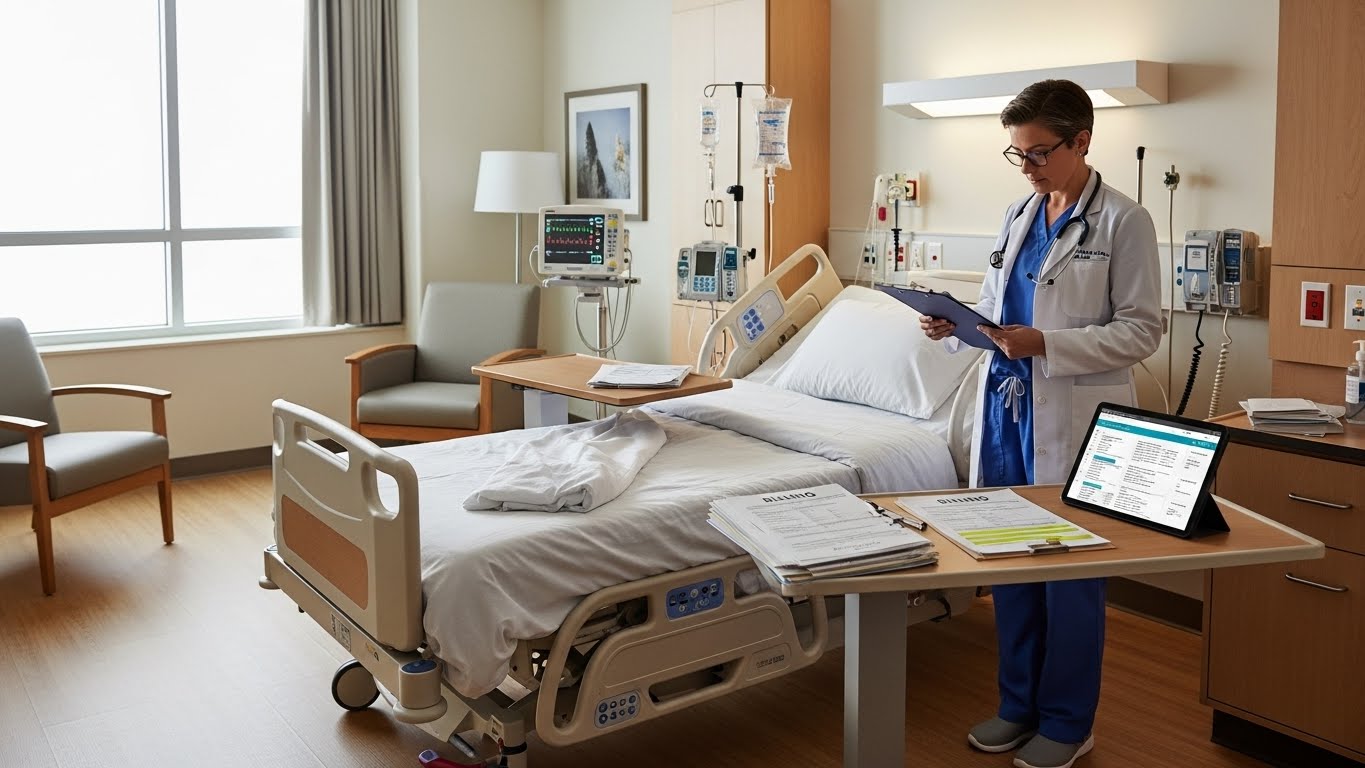
Revenue Code 0119 is specifically used when a patient is placed in a private room for reasons that do not fit into other specialty categories.
When to Use Revenue Code 0119
Hospitals should use Revenue Code 0119 in two main situations:
1. The patient is assigned a private room for medical necessity
If the patient requires isolation or a private environment due to clinical reasons, Revenue Code 0119 is appropriate.
Common examples:
- Infection control or isolation precautions
- Immunocompromised patients
- Behavioral instability requiring room separation
- High-risk postoperative recovery
- Conditions requiring limited exposure
When medical necessity exists, payers expect proper documentation supporting the private room assignment.
2. The patient chooses a private room for comfort or preference
If there is no medical necessity, Revenue Code 0119 can still be used, but the charge becomes non-covered by many insurance plans.
Examples:
- Patient prefers privacy
- Family requests a private room
- Patient wants additional space or comfort
In this case, hospitals can still bill the patient directly, but payers typically deny the room charges unless a medical reason exists.
Documentation Needed for Revenue Code 0119
To avoid denials, the medical record must clearly explain why the patient was placed in a private room.
Required documentation includes:
- Provider’s order for private room
- Reason for isolation or separation
- Nursing notes supporting the condition
- Infection control guidelines
- Clinical justification if isolation is used
Payers look for consistent documentation across:
- Physician notes
- Nursing notes
- Admission records
- Treatment plans
If documentation is weak or inconsistent, expect denials.
How to Bill Revenue Code 0119 Correctly
Billing Revenue Code 0119 requires accuracy across three areas:
1. Use the Correct Rate and Units
Units are based on midnight census, but some payers use hourly calculations.
Make sure:
- Room-and-board charge master rates are correct
- Units match facility policy
- Billing aligns with payer contract expectations
2. Pair Revenue Code 0119 with Appropriate HCPCS (If Required)
Most payers do not require HCPCS codes for room and board, but some Medicaid programs do.
If HCPCS is required, verify payer-specific rules.
3. Validate Prior Authorization Requirements
Some payers require:
- Inpatient authorization
- Continued stay reviews
- Justification for private room assignment
If authorization doesn’t support a private room, the claim is at risk.
Common Reasons Revenue Code 0119 Gets Denied
Understanding why denials happen is essential. These are the most common triggers:
1. No documented medical necessity
This is the #1 reason Revenue Code 0119 is denied.
If the private room is not clinically justified, many payers consider it a patient convenience issue.
2. Inconsistent documentation
If nurses say “no isolation needed” but the provider orders a private room, denial is likely.
3. Wrong revenue code selection
Facilities often mistakenly choose:
- 0120 (Semiprivate)
- 0111 (Med/Surg)
- 0112 (OB)
Wrong code = denial or underpayment.
4. Incorrect units
If room-and-board units don’t match length of stay, claim editing systems flag the error.
5. Missing isolation or infection notes
When isolation is cited but not supported by documentation, payers deny the charge.
How to Avoid Denials When Using Revenue Code 0119
To keep room-and-board charges clean and fully reimbursed, use these steps:
1. Establish Clear Hospital Policies for Private Rooms
Define:
- When a private room is medically required
- Documentation expectations
- Billing rules for patient preference cases
2. Require Providers to Document Medical Necessity Explicitly
Examples of acceptable statements:
- “Patient requires isolation due to airborne infection.”
- “Private room required due to chemo-related immunosuppression.”
3. Validate Room Assignments During Utilization Reviews
UR teams must confirm room placement aligns with:
- Clinical notes
- Isolation standards
- Payer criteria
4. Audit Revenue Code 0119 Claims Regularly
Look for:
- Wrong units
- Missing documentation
- Conflicts in chart notes
5. Educate Billing and Coding Teams
Make sure everyone understands:
- When to assign Revenue Code 0119
- What documentation is needed
- Payer-specific nuances
Final Thoughts
Revenue Code 0119 is simple on paper but commonly misused in hospitals. When applied correctly and supported with strong documentation, it ensures accurate inpatient reimbursement and prevents costly denials. When misused, payers will reject the charge instantly.
If your hospital is seeing repeated denials or underpayments for private room billing, your RCM and utilization review workflows need tightening or your billing team needs stronger oversight.