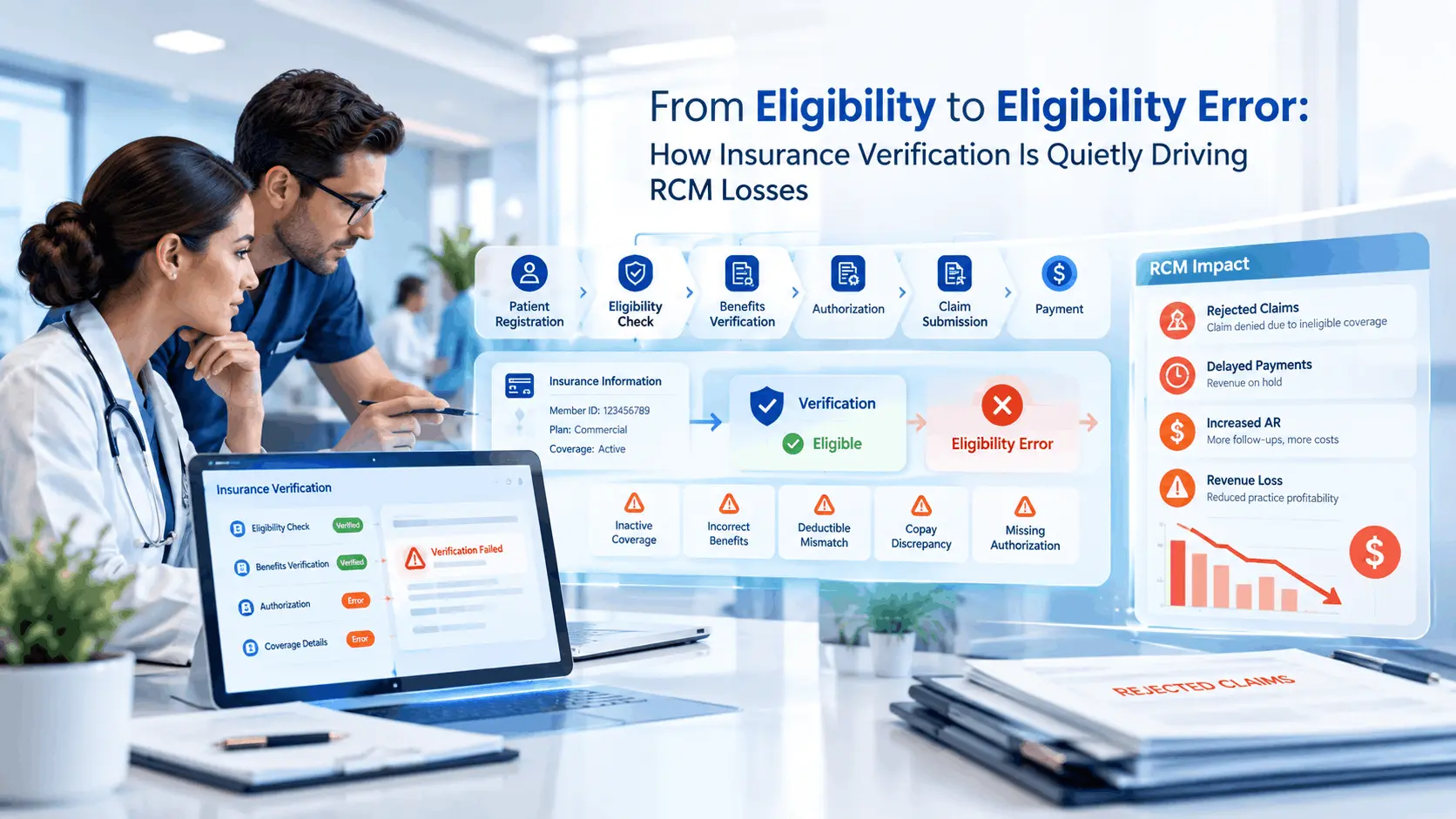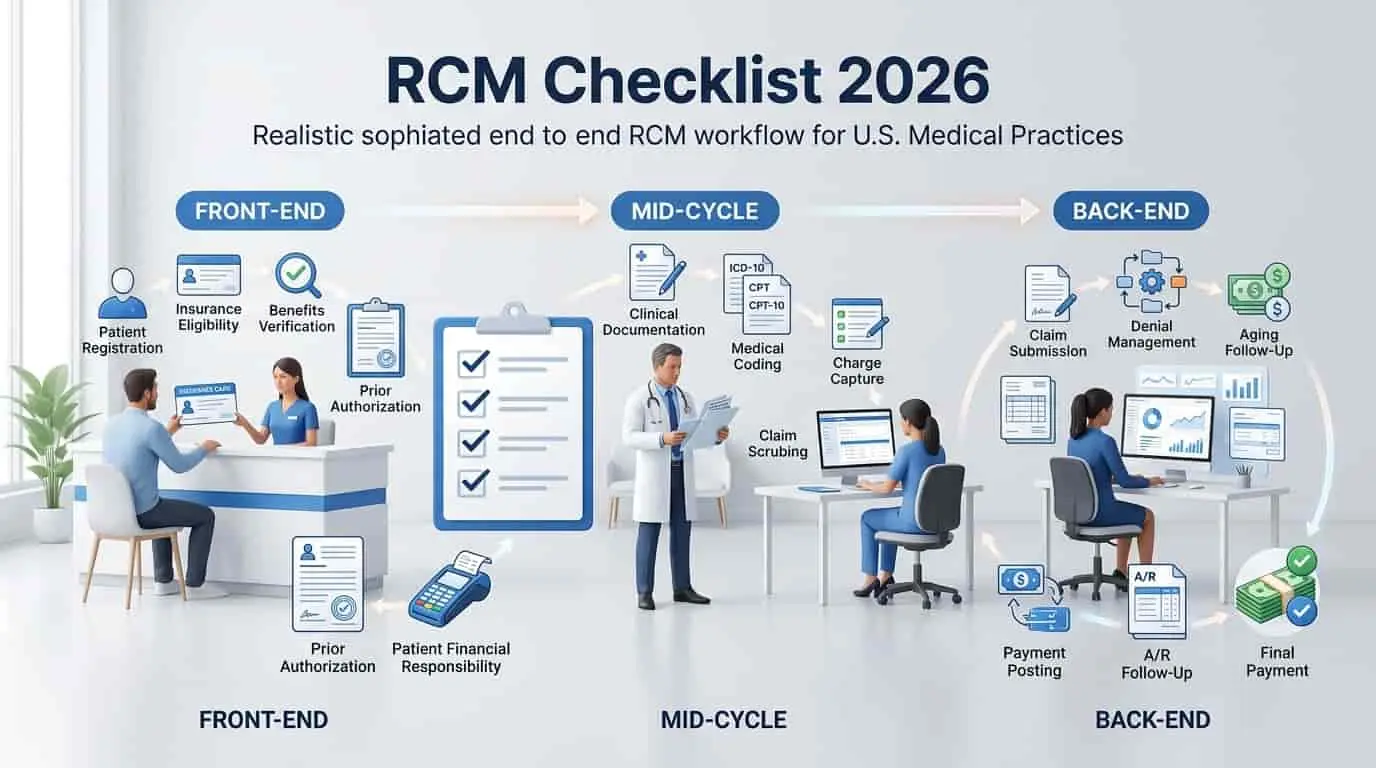

Authorization in Healthcare has silently emerged as one of the largest financial risks facing the United States medical practices. Not only is it a necessary requirement prior to any procedure, but in 2026, Authorization in Healthcare can lead to delays in service, physicians’ burnouts, claim denials, and financial losses for your practice. If your medical practice files claims to any commercial payers, Medicare Advantage Plans or Medicaid, you need to be aware of Authorization and how it affects your practice.
This guide covers everything about Authorization from its definition, types, process of obtaining authorizations, recent changes according to the new federal regulation, and finally tips on how medical practices can prevent claim denials through Authorization in Healthcare.
What Is Authorization in Healthcare?
An authorization is the permission a health plan must give to consider paying for a particular treatment, test, procedure, equipment, or drug. The use of authorization began as a cost-containment and utilization management process, which allowed insurers to verify that a particular service was medically necessary and included in a plan’s coverage before payment was made.
Today, authorization is an aspect of every area of healthcare delivery from radiology, surgery, specialty medications, durable medical equipment, home health services, physical therapy, and even routine follow-up visits. Failure to get it right, or to obtain it altogether, is one of the quickest ways to convert an otherwise good claim into a denial.

5 Types of Authorization in Healthcare
Authorization is not one consistent process but rather a changing one, varying in how it occurs based on the timing within the patient care process and its purpose. The five most common authorizations that need to be managed are:
- Prior Authorization The most prevalent type of authorization, which involves obtaining authorization from the payer before providing the service, treatment or medication. It covers complex surgeries, advanced diagnostic procedures, specialty medications and durable medical equipment. It is not usually required in emergencies and is expected to be obtained before the service date or shortly thereafter.
- Concurrent Authorization Approval received in the process of the treatment itself to determine the continued necessity of the procedure. It is used for prolonged hospital stay, multiple procedures (physical therapy or chemotherapy sessions), and continuous home health care; the payer assesses and approves coverage on an ongoing basis.
- Retroactive Authorization Approval received after performing the service and used only in special situations – emergencies, unconscious patients, mid-procedure changes in insurance status, failure to obtain authorization previously despite the attempt. It serves as a safety net allowing providers to get paid even if it was impossible to obtain prior authorization beforehand.
- Specialty Authorization Authorizing the specialty service or treatment provided by a specialist, including consultations, advanced diagnostics procedures, high-cost procedures and specialty medications for treating conditions such as cancer or rheumatoid arthritis. It verifies the medical necessity and coverage of the procedure.
- Referral Authorization Confirms that a primary care provider’s referral to a specialist or outside service lines up with the patient’s coverage rules. This is especially common in HMO plans, where seeing a specialist without an in-network referral can leave the patient responsible for the full cost of care.
How the Authorization in Healthcare Process Works
While the exact workflow varies by payer, the typical authorization process follows these steps:
- Order is placed. The provider determines a service, test, or medication is needed.
- Authorization requirement check. Staff verify whether the specific CPT/HCPCS code and payer combination requires authorization.
- Documentation gathering. Clinical notes, diagnosis codes, prior treatment history, and medical necessity justification are compiled.
- Submission. The request is submitted via payer portal, fax, or increasingly, electronic authorization (ePA) tools.
- Payer review. The payer’s utilization management team (sometimes assisted by AI-based adjudication systems) reviews the request against coverage criteria.
- Determination. The payer approves, denies, or requests additional information within a defined turnaround window.
- Appeal (if denied). If denied, the practice can submit a reconsideration or formal appeal with supporting documentation.
What’s changed under CMS-0057-F
The CMS Interoperability and Authorization Final Rule (CMS-0057-F) came into effect in 2026 for Medicare Advantage, Medicaid, CHIP, and ACA marketplace plans. In accordance with the rule, these payers will have to:
Issue decisions on expedited (urgent) requests within 72 hours and standard requests within 7 calendar days Provide a specific reason for every authorization denial Publicly report authorization metrics annually Build standardized electronic APIs to speed up data exchange (phased in through 2027)
CMS predicts that such changes will bring approximately $15 billion in savings in a decade — but what is happening on the ground proves otherwise, which introduces the data.
The Latest Authorization and Denial Data (2026)
The numbers paint a clear picture:Authorization in Healthcare is getting harder to manage, not easier.
- The U.S. healthcare system’s industry-wide initial claim denial rate is running at roughly 12.6% in 2026, translating to an estimated 806 million denied claims a year and about $262 billion in system-wide cost from rework, delays, and administrative overhead.
- 41% of providers now report denial rates above 10% on their claims, up from 38% in 2024 and 30% in 2022, a steady year-over-year climb.
- Authorization denials specifically jumped roughly 31% year-over-year in 2026, driven by expanded authorization requirement lists, AI-assisted payer adjudication, and shorter appeal windows.
- On the payer side, half of providers point to missing or inaccurate claim data as the top cause of denials, with authorization issues cited by roughly a third of respondents.
- Medicare Advantage has seen some of the sharpest increases, with authorization denials on certain high-cost services climbing as much as 56% in 2026, yet the vast majority of appealed MA denials are ultimately overturned, suggesting many initial denials were avoidable.
- Hospitals alone are estimated to have absorbed roughly $48.4 billion in revenue leakage from denials in 2025.
Why Authorization Claims Get Denied
Understanding the root causes is the first step to fixing them. The most common reasons include:
- Missing or expired Authorization in Healthcare: service rendered without a valid authorization on file
- Incomplete or inconsistent clinical documentation insufficient evidence of medical necessity
- Coding mismatches diagnosis code doesn’t align with the requested procedure
- Authorization for the wrong code or units approved for one CPT code but billed under another
- Missed timely filing or appeal windows especially problematic given shortened turnaround times
- Eligibility or plan changes patient’s coverage changed between authorization and date of service
- Referral or network requirements not met especially in HMO/MA plans
How to Prevent Authorization in Healthcare Claim Denials
Reducing denials comes down to tightening the process at every stage before submission, during review, and after a decision comes back.
- 1. Verify eligibility and authorization requirements before scheduling Confirm active coverage and whether the specific service requires authorization before the patient is even scheduled.
- 2. Standardize documentation templates Build clinical documentation templates around each payer’s medical necessity criteria so nothing is missed during submission.
- 3. Use electronic authorization (ePA) tools Manual fax-based submissions remain a major bottleneck industry-wide. ePA tools cut turnaround time and reduce transcription errors.
- 4. Track authorization expiration and unit limits Authorizations often come with a validity window and a maximum number of approved units or visits track both closely.
- 5. Audit claims before submission A pre-bill review step catches code mismatches, missing modifiers, and documentation gaps before the payer ever sees the claim.
- 6. Build a fast, dedicated appeals workflow With shortened appeal windows now standard, practices need a system to flag denials immediately and route them for appeal within days, not weeks.
- 7. Monitor denial patterns by payer and service line Recurring denial reasons from the same payer usually point to a fixable process gap, not bad luck.
- 8. Outsource where volume outpaces staff capacity Many practices are turning to dedicated revenue cycle and authorization support to keep pace with rising authorization volume without burning out front-office staff.
What is the difference between authorization in Healthcare and a referral?
A referral is a recommendation from a primary care provider to see a specialist, typically required by HMO-style plans. Authorization is a separate approval from the insurance company confirming that a specific service, drug, or procedure will be covered before it’s performed.
How long does authorization typically take?
Under new CMS rules effective in 2026, affected Medicare Advantage, Medicaid, CHIP, and ACA marketplace plans must decide on urgent requests within 72 hours and standard requests within 7 calendar days. Commercial payers not covered by the rule may still take longer.
Does an approved authorization guarantee payment?
No. Authorization confirms the service meets medical necessity criteria at the time of the request, but final payment still depends on active eligibility, benefit limits, and contractual terms at the time the service is actually performed.
What should a practice do if a authorization is denied?
Review the specific denial reason (now required under CMS-0057-F), gather any missing documentation, and submit an appeal promptly. Appeal overturn rates are often high, particularly in Medicare Advantage, so denials are frequently worth challenging rather than writing off.
Why are authorization in Healthcare denials increasing in 2026?
Several factors are converging: more services now require authorization, payers are using AI-assisted adjudication that flags requests more aggressively, appeal windows have shortened, and many practices still rely on manual, fax-based submission workflows that are prone to error.
Can outsourcing authorization and billing reduce denials?
Yes dedicated billing and RCM teams that specialize in payer-specific requirements, documentation standards, and appeals timelines tend to catch errors before submission and respond to denials faster than in-house staff stretched across multiple responsibilities.
Don’t Let Authorization Errors Drain Your Revenue
Denial of Authorization in Healthcare is one of the most avoidable and costly leaks in the revenue cycle of a practice. In light of rising rates of denials and increasingly stringent payer policies, practices have to ensure that their verification, documentation, and appeals process is ironclad.
Allstars Medical Billing is there to make life easier for providers in dealing with authorizations from verification and documentation help to prompt and organized appeals management. This way, you can minimize claim denials and maximize revenue collection.
👉 Consult Allstars Medical Billing for minimizing denial rate.