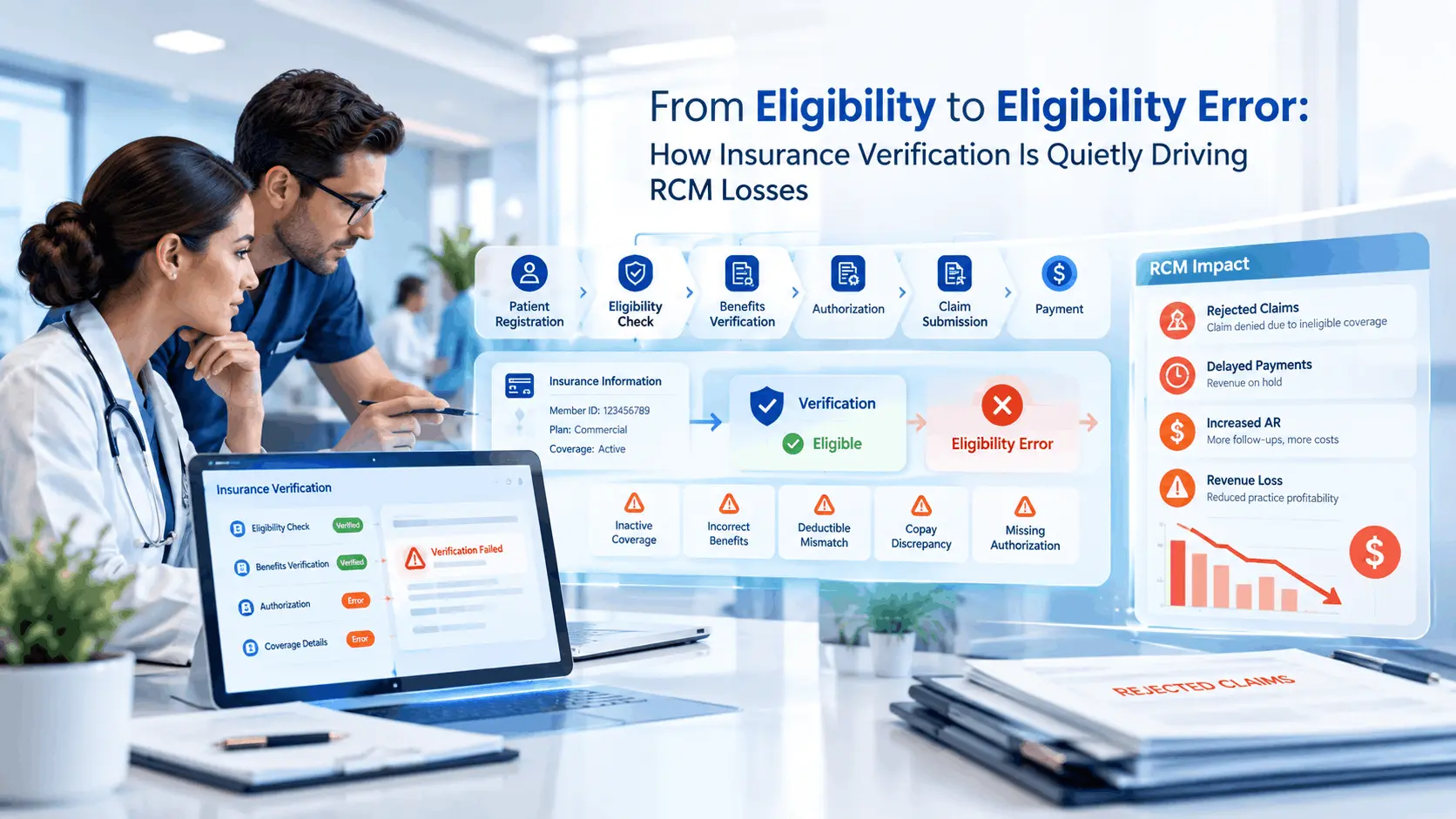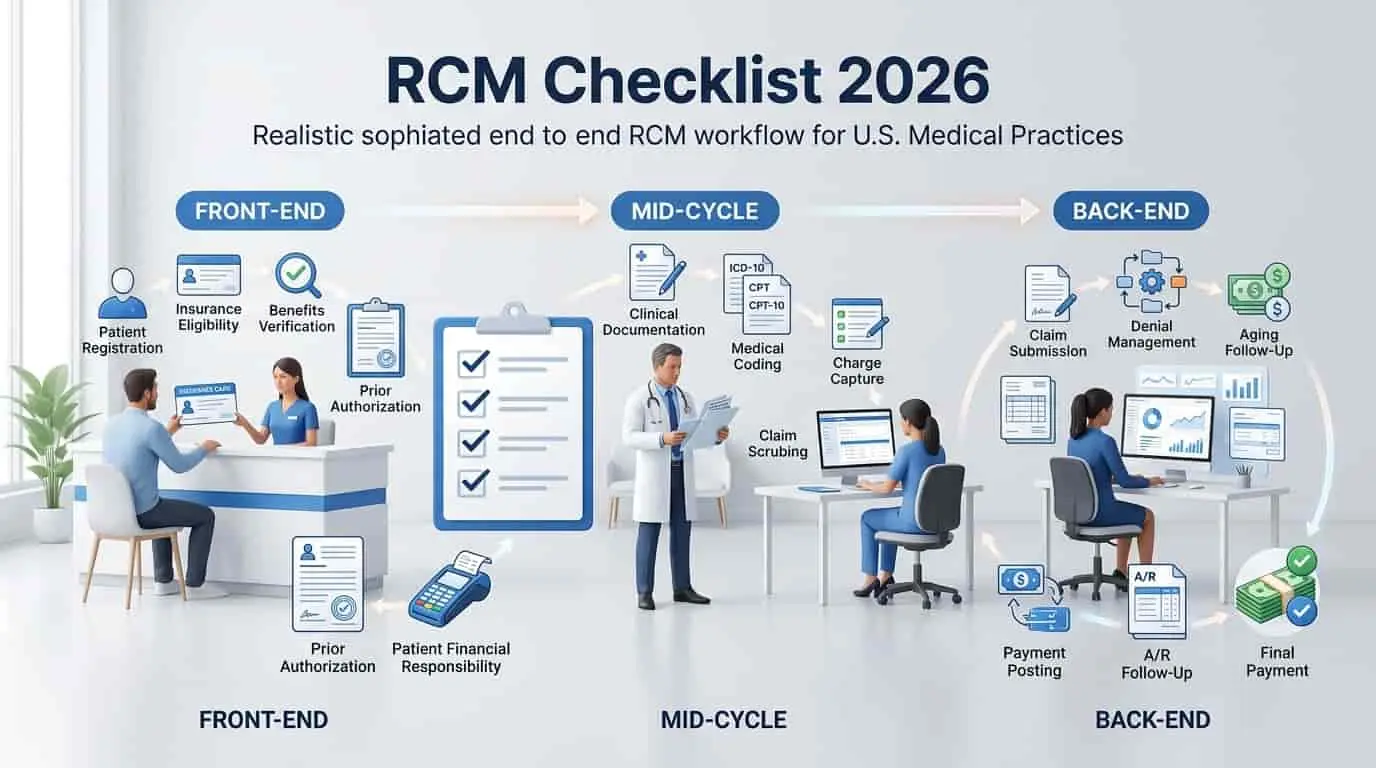

What would you say if you had just started to take in patients covered by Medicaid, and in two weeks’ time, about half of your claims come back either with coding issues or approval problems? Does the above scenario sound very familiar?
Even experienced health care providers find Medicaid billing difficult because of the fact that it is completely different from commercial insurance. There are various rules that vary from state to state, payment amounts are different and even a slight omission on your side may prevent you from getting the money.
Now, think how important it can be to understand the billing process when Medicaid covers over 80 million people across the United States and, thus, is the largest health insurance program in terms of enrolment. For each provider, who wants to provide services to these people, knowledge of the billing process becomes crucial.
In this guide, all aspects of Medicaid billing will be discussed step-by-step from enrolment through an appeal of a denial claim.
Medicaid versus Medicare: Key Differences
Medicaid is an insurance scheme run by both the state and federal governments for low-income earners including children, pregnant women, elderly people, and those living with disabilities. While the federal government comes up with policies that are generally applicable, each state will have its own plan; thus the billing process, treatment options, and costs vary widely from one state to another.
This is one aspect that confuses many new healthcare providers as what works in one state may not work in another at all.
- The Texas Medicaid Program (via HHSC) uses the fee-for-service program as well as managed care organizations, which are mostly MCOs like Molina and UnitedHealthcare Community Plan.
- The California Medi-Cal Insurance Scheme has been significantly revamped under the CalAIM Project.
- The Florida Medicaid Insurance Scheme operates almost entirely using MCOs in regions.
Here’s a simple breakdown of the core differences between the two programs:
| Feature | Medicaid | Medicare |
|---|---|---|
| Who it covers | Individuals and families with low income | People 65 and older, and those with disabilities |
| Funding | Combined federal and state dollars | Federal dollars only |
| Oversight | Run by individual states, with state-specific rules | Run nationally, with uniform rules |
| Billing forms | CMS-1500 or UB-04, depending on provider type | CMS-1500 or UB-04 |
| Payment rates | Generally lower than Medicare; differs by state | Set by a single national fee schedule |
| Eligibility | Can shift monthly — check before each appointment | Generally stable, renewed yearly |
Who Is Eligible for Billing for Medicaid?
Anyone who wishes to start billing Medicaid will first have to be enrolled by his or her State’s Medicaid agency.
These providers are generally eligible:
- Physicians (MD or DO) – generalists and specialists
- Nurse Practitioners and Physician Assistants
- Behavioral health practitioners – licensed clinical social workers, licensed counselors, psychologists, and psychiatrists
- Hospitals in inpatient, outpatient and emergency setting
- Agencies providing home health services such as skilled nursing, physical therapy or aide services
- Federal Qualified Health Centers (there is a specific reimbursement structure for them)
- Dental practices specializing in pediatric Medicaid patients
- Suppliers of durable medical equipment
- Treatment facilities for substance use disorders
The list of Medicaid eligible provider categories differs from state to state, and often additional licensure beyond the basic requirements is required. For example, in New York, behavioral health providers may need additional licenses from OMH and/or OASAS in addition to medical license.
Eight-Step Medicaid Claims Process
Step One: Become Certified and Credentialed
No claims will go through until you have obtained a Medicaid Provider Number from your respective state – and this is different from obtaining an NPI number.
Standard documents that need to be submitted include:
- Your NPI number – Type 1 and Type 2, if you are billing as part of a group
- Valid and unrestricted medical license in your state
- Your tax ID/EIN
- DEA number if you are a prescriber of drugs
- Proof of malpractice insurance
- Completed CAQH profile – used by most states for credential verification purposes
- Practice location information
Note that it takes 30 to 90 days, sometimes more, for the process of getting your Medicaid credentials to be approved. Start the process early enough before you begin serving Medicaid patients.
Remember credential revalidation: Medicaid credentialing expires after three to five years under CMS regulations, and each state may also require you to update your credentials every time there is a change to your license, address, and ownership structure. Failure to renew will result in your claims being rejected.
Step 2: Confirm Eligibility Before Each Visit
This single habit prevents more denials than almost any other step. Medicaid eligibility is reassessed monthly, so coverage that was valid last week could have lapsed by today due to an income change, a missed renewal, or a routine state review.
Don’t assume coverage is active — verify it every time.
Ways to check eligibility:
- Your state’s online Medicaid provider portal, which typically offers real-time lookups
- A clearinghouse (Availity, Change Healthcare, etc.) for checking multiple patients at once
- Your EHR, if it has built-in payer eligibility checks
Managed care vs. fee-for-service: Determine whether the patient is enrolled with a managed care plan or under the state’s traditional program. This changes everything — for MCO patients, you bill the plan directly and follow its specific rules around authorizations, referrals, and covered services.
If a patient turns out to be ineligible: Tell them as early as possible. Offer to reschedule once coverage is restored, or talk through self-pay alternatives. If the appointment already happened, look into whether your state permits retroactive eligibility or whether another payer might apply.
A clearinghouse (Availity, Change Healthcare, etc.) for screening multiple patients at once
Your EHR, if it is equipped with payer eligibility verification
Managed care vs. fee-for-service: Ascertain whether the patient uses a managed care or the state’s standard plan. The choice is critical because, in case of MCO, you must send claims to the plan, and adhere to their guidelines regarding authorization, referral, and payment for medical services.
What if a patient ends up being ineligible? Inform the patient of it as soon as possible. Reschedule for a later visit or discuss your self-pay options with the patient. If the visit already took place, explore whether there is an opportunity to retroactively establish eligibility or use some other payer’s plan.
Step 3: Get Prior Authorization First
Skipping prior authorization is about as good a way as any to ensure that your claim will be denied. If you haven’t gotten prior authorization, Medicaid is unlikely to pay you, even though retroactive authorization is possible — not to mention difficult to obtain.
Services requiring prior authorization:
- Elective procedures and surgeries
- Specialist referrals (requirements differ by state/plan)
- Durable medical equipment
- Non-emergency hospital admission
- Behavioral health services over some threshold number
- Certain drugs (usually expensive and/or specialty medicines)
- Home health and skilled nursing visits
Submitting a request: There is an online process for this in most states. This requires the patient’s Medicaid number, the relevant code for the procedure, the patient’s diagnosis code, and justification that the visit is medically necessary. MCOs may allow submission of the request via phone or fax, too.
If you skip this step, then: your claim will get denied on the grounds of lack of prior authorization. You can attempt to get retroactive authorization; however, this process isn’t always successful and requires strong documentation, and it’s easier just to get authorization first.
Step 4: Apply the Correct Codes
Accurate coding underpins every clean Medicaid claim. Get a code wrong — or attach the wrong modifier to a correct code, and you risk a denial or, in worse cases, an audit flag.
Three coding systems come into play:
| Code Type | What It Represents | Example |
|---|---|---|
| CPT | The procedure performed | 99213 – established patient visit, level 3 |
| ICD-10 | The diagnosis behind the service | J06.9 – unspecified acute upper respiratory infection |
| HCPCS | Supplies, equipment, drugs, and non-physician services | A4253 – blood glucose test strips |
Modifiers count. These two-character add-ons clarify how or where care was delivered. Some common ones:
- Modifier 25 — a distinct evaluation and management service on the same day as a procedure
- Modifier 59 — a separate, distinct procedure (important for avoiding bundling denials)
- Modifier GT — telehealth delivered via audio and video
Missing a needed modifier ranks among the top reasons Medicaid claims get rejected.
Place of Service codes matter too. Coding a telehealth visit as POS 11 (office) instead of POS 02 (telehealth) creates a mismatch that can lead to denial.
Always check your state’s current Medicaid fee schedule before billing — not every code is payable everywhere, and some carry limits on frequency or patient age.
Tired of Medicaid claims coming back denied? Allstars Medical Billing helps US providers clean up coding errors, cut denial rates, and speed up reimbursement, so your team can focus on patients instead of paperwork. [Get a free billing audit from Allstars Medical Billing
Step 5: Document Thoroughly
Clinical documentation is not only proof of the provision of care but also a tool to defend yourself in the case of an audit. The auditor will compare what was billed against the documentation provided.
Good clinical documentation must include:
- Chief complaint
- History of the present illness
- Medical/medication history (background)
- Objective exam findings corresponding to the level of the billing code
- Diagnosis and rationale (ICD-10 justification)
- Treatment plan, which includes medications, referrals, and follow-ups
- Time spent (for time-based billing codes)
Many clinics prefer SOAP (Subjective, Objective, Assessment, Plan) documentation structure to maintain consistency in the format of their notes. No matter which format you choose, your documentation should be able to justify the level of service provided.
For example, for a 99214 visit, the documentation must reflect moderate complexity of a patient condition and treatment: a comprehensive patient history and several diagnoses. If you want to bill a 99214, you shouldn’t document a visit, which was very simple and related to just one issue.
Documentation also improves prior authorization requests and denials appeal process, since they require medical necessity evidence.
Step 6: File Claims Electronically
With documentation done and codes verified, it’s time to submit. Electronic filing is preferred, and often mandatory, in most states.
Which form applies:
| Form | Typical Users |
|---|---|
| CMS-1500 | Physicians, NPs, PAs, therapists, outpatient providers |
| UB-04 | Hospitals, skilled nursing facilities, home health, surgical centers |
Claim submission methods:
- Via your EHR or practice management software via its connection with the clearinghouse
- A third party clearinghouse (Availity, Waystar, Change Healthcare), which does a preliminary review to detect mistakes
- Submission directly through your state’s Medicaid portal
Don’t forget about the deadlines, as timely submission requirements are strict and missing it usually results in a non-payment of the claim:
- Most states: 90-180 days since the date of the service
- Some states (e.g. Texas and California): up to 365 days
- MCOs typically have different, sometimes shorter, deadlines
Five most common reasons for denial:
- NPI number incorrect or mismatching the enrollment form
- Medicaid ID submitted incorrectly – even a single mismatching digit will cause the denial
- Missing or lacking in specificity diagnosis code
- Unbundled codes submitted separately, which shouldn’t be
- Inconsistent service date and the authorized one
Step 7: Track Your Claims and Understand the Remittance Advice
Claim submission does not equal claim resolution.
Tracking your claims: You can usually track your claims in real time via the state portals, and your clearinghouse will send you an acknowledgment file (277CA) stating if your claim was processed successfully.
Electronic Remittance Advice (ERA/835): When Medicaid processes your claim — either paid, adjusted, or denied you will get this file, which will explain what happened to your claim. These can usually be posted automatically by your billing system.
Interpreting the codes: The Explanation of Benefits will have the reason code of why your claim was adjusted or denied. A few examples of common adjustment reason codes are:
- CO-4 — Procedure code does not conform to modifier
- CO-97 — Payment for this service is included in payment for another service
- PR-96 — Non-covered charge
Getting to know the codes that come up repeatedly will help you process denials faster.
Step 8: Manage Denials and Appeals
A denial isn’t the end, think of it as a detour. Most denied Medicaid claims are recoverable if you act fast and correctly.
Common denial reasons and fixes:
| Reason | How to Address It |
|---|---|
| Wrong or missing NPI | Match the NPI to your enrollment record and resubmit |
| Coverage wasn’t active | Recheck eligibility for the exact service date; look into retroactive or dual coverage |
| Missing modifier | Find the correct modifier in your fee schedule and resubmit |
| Authorization missing or expired | Request retro-authorization or appeal with supporting clinical notes |
| Filed too late | Appeal with proof of timely submission — timestamps, clearinghouse reports, etc. |
Appeal filing: Submit the initial claim along with the cause of denial, updated and additional documents where applicable, and reasons for payment of the claim. Most states offer a period between 30 and 120 days to submit the appeal after the denial.
In the case of medical necessity denial, it would be helpful to provide clinical guidelines or a letter from the physician that would support the appeal. Managed care organizations especially appreciate well-grounded appeals. Treat appeals in the same way as regular claims.
Common Errors Among Different Providers
Even seasoned billing staff commit these mistakes:
- Upcoding. Submitting a bill with a 99215 code when the note only justifies 99213 is not only a violation but also one of the most common reasons for post-payment audit.
- Unbundling. Billing a service that needs to be included with another service — such as billing separately wound closure and E&M when the E&M should be bundled with the surgery package.
- Failure to seek prior authorization. One of the leading reasons why claims are never paid.
- Incorrect Place of Service code. Indicating an office-based procedure for the telehealth procedure will result in an inconsistency.
- Not updating fees regularly. Fees change from time to time, which means your clinic is missing out on payments or creating mistakes.
- Failure to renew license/ revalidate. Failure to renew the license results in denial of all submitted claims.
- Considering Medicaid as one. Managed Care Organizations have their own requirements, deadlines, and ways of submitting claims.
How often do Medicaid codes and fee schedules change?
Most states update fee schedules annually, often each January, with occasional mid-year adjustments for specific services. CMS updates CPT codes yearly (January) and ICD-10 codes yearly (October). Keeping up with these changes helps you avoid denials from outdated codes or rates.
What if my claim gets denied?
It’s not necessarily final. Fixable errors (wrong code, missing modifier) can usually be corrected and resubmitted. Denials based on medical necessity or authorization issues can be formally appealed, typically within 30 to 120 days. Acting quickly improves your odds of recovery.
How long does Medicaid take to pay?
Clean electronic claims are usually processed within 14 to 30 days. Paper claims take longer, often 30 to 45 days. Managed care plans may run on slightly different timelines, and delays usually mean a claim is under review or needs more documentation.
Can I bill both Medicaid and Medicare for the same patient?
Yes, for “dual eligible” patients. Medicare is generally billed first, with Medicaid covering remaining costs like copays and deductibles. Both claims need to be submitted correctly, following coordination-of-benefits rules.
Do I need a separate NPI for Medicaid?
No your existing Type 1 and Type 2 NPIs apply. Just make sure they’re correctly linked in your Medicaid enrollment record, since mismatches between the billing and rendering NPIs are a common cause of denials.
Let Allstars Medical Billing Handle the Heavy Lifting
Chasing denied claims, tracking revalidation deadlines, and keeping up with state-specific rules takes time away from patient care. Allstars Medical Billing works with US providers across all specialties to manage enrollment, coding, claim submission, and denial appeals — so your Medicaid revenue cycle runs smoothly from day one.
[Contact Allstars Medical Billing today for a free billing audit →] Serving providers nationwide · No commitment required.