Introduction
Most healthcare practices lose revenue because their internal processes are messy, inconsistent, and poorly monitored. The problem isn’t insurance companies it’s weak workflows, bad verification, sloppy coding, and a lack of follow-up. This breakdown explains the real operational failures that cause healthcare revenue loss and how practices unintentionally destroy their own cash flow.
The Core Causes of Healthcare Revenue Loss
Front-Desk Intake Errors
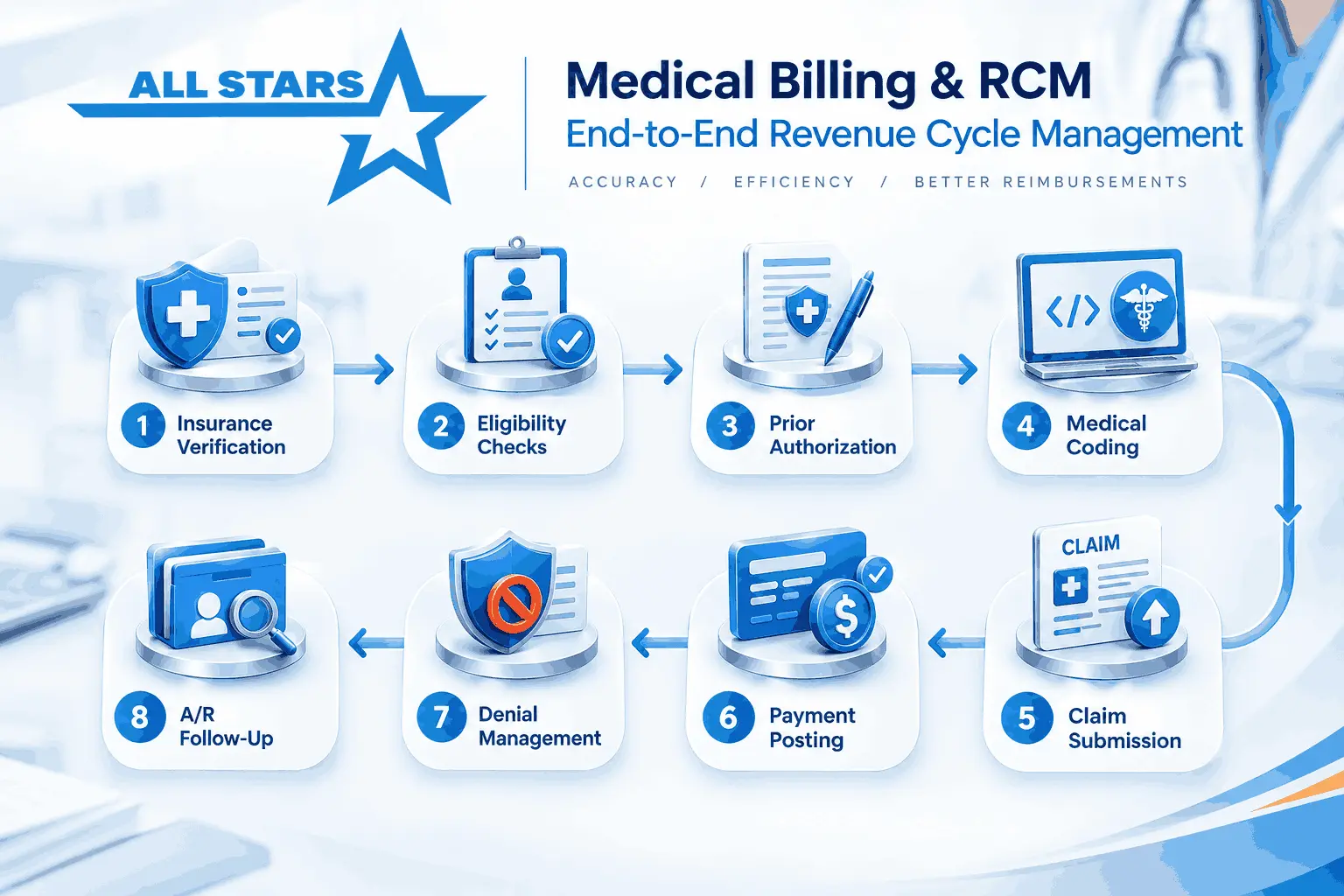
Your revenue cycle begins at the front desk. If staff collect incomplete insurance details, wrong DOB, outdated cards, or inconsistent patient data, your claims will get denied immediately. Intake errors are the fastest way to sabotage reimbursement because they create unavoidable claim rejections down the line.
Weak Eligibility and Benefits Verification
Skipping verification because “the patient came last month” is a guaranteed way to lose money. Insurance plans change daily, deductibles reset, and employers switch carriers. Without strict eligibility checks for every visit, you end up providing services with no assurance of reimbursement.
Coding Errors and Under-Coding
Inaccurate coding is one of the biggest revenue killers. Under-coded services result in thousands of dollars lost monthly. Over-coding increases audit risk. Coding must match documentation precisely, using correct CPT, ICD-10, and modifiers. When clinicians rush documentation or coders guess, revenue loss becomes inevitable.
Slow or Dirty Claim Submission
A high proportion of claims are rejected due to small errors missing fields, wrong policy numbers, invalid NPIs, or mismatched diagnosis codes. Dirty claims clog the entire revenue cycle. Even worse, practices that delay claim submission increase timely filing denials, creating permanent revenue loss.
Ineffective Patient Collections
Patients are responsible for more financial responsibility than ever. Practices that don’t collect copays upfront, don’t confirm deductible status, or avoid discussing balances end up with significant revenue gaps. Expecting patients to “pay later” is unrealistic. A disciplined, predictable collection system is non-negotiable.
No Denial Management Workflow
Most practices treat denials as random problems instead of systemic patterns. Without tracking denial reasons, payer trends, and repeated coding issues, the same errors happen over and over. Denials become lost revenue only when practices fail to correct and resubmit them quickly.
Lack of KPI Tracking and Reporting
You cannot fix what you don’t measure. Most struggling practices fail to monitor critical KPIs such as:
- Clean Claim Rate
- First-Pass Acceptance Rate
- Denial Percentage
- Days in A/R
- Aging Over 90 Days
- Net Collection Rate
Ignoring these metrics leaves your revenue cycle blind. Without KPIs, you have no idea where money is leaking.
Untrained or Overloaded Billing Teams
Billing is a specialized skill, yet many practices hand it to undertrained staff. When one person handles coding, submission, denial management, posting, and follow-up, accuracy drops. A weak billing team guarantees lost revenue not because of effort but because of capacity and skill gaps.
Missing or Incorrect Authorizations
Authorization failures cause massive financial loss. Staff who forget to request authorizations, misread payer rules, or miss expiration dates generate non-payable claims. Many of these denials are irreversible. Authorization tracking must be systematic, not casual.
Not Updating Payer Policies Regularly
Insurance companies update coverage rules, billing requirements, telehealth guidelines, and documentation standards frequently. Practices that don’t review policy updates continue submitting claims that no longer meet requirements, causing preventable denials.
How Practices Can Stop Revenue Loss Immediately
Standardize All Front-End Workflows
Intake, verification, and authorization must follow strict protocols. Consistency in front-end processes directly reduces denials and stabilizes cash flow.
Automate Eligibility Verification
Real-time eligibility tools eliminate manual errors. Automated systems verify coverage, deductible status, copays, and plan changes instantly, reducing rejections.
Strengthen Coding Accuracy
Invest in trained coders, documentation audits, and compliance-based coding standards. Accurate coding protects revenue and minimizes audit exposure.
Enforce Same-Day Claim Submission
Clean claims must be submitted every day. Delays increase denial rates, slow cash flow, and cause timely filing losses.
Improve Patient Payment Systems
Collect copays at check-in. Use digital payment links. Provide clear billing expectations. Make collections predictable, not optional.
Build a Strong Denial Management System
Track reasons, categorize denial trends, and fix the source. Resubmit corrected claims quickly. Prevention saves more revenue than correction.
Upgrade Your Billing Team or Outsource
If your internal team lacks structure, training, or manpower, outsourcing reduces revenue leakage and ensures compliance-driven billing.
Conclusion
Healthcare revenue loss doesn’t happen because of one major problem it happens because dozens of small errors pile up across the revenue cycle. Intake mistakes, poor verification, weak coding, slow submissions, and ignored denials silently drain your cash flow. When workflows are standardized, verified, and properly monitored, revenue stabilizes and collections rise consistently.