Electronic medical claims play a critical role in the modern healthcare revenue cycle. Healthcare providers use these digital transactions to request payment from insurance companies for services delivered to patients. Instead of relying on paper forms and manual processing, providers can submit claim information electronically, helping streamline billing operations and improve communication with insurance payers.
In the United States, electronic medical claims typically use standardized transaction formats to communicate patient information, provider details, diagnosis codes, procedure codes, and charges. The 837 transaction is widely used for electronic healthcare claim submissions and includes different formats for professional, institutional, and dental claims.
Understanding how electronic medical claims work helps physicians, medical practices, hospitals, and healthcare organizations identify billing errors, reduce avoidable claim rejections, and manage reimbursements more efficiently.
What Are Electronic Medical Claims?
Electronic medical claims are digital submissions that healthcare providers send to insurance companies or other healthcare payers to request reimbursement for medical services. These claims contain the information necessary for the payer to determine whether the services qualify for payment under the patient’s insurance plan.
A typical electronic medical claim may include:
- Patient and subscriber information
- Insurance identification and policy details
- Billing and rendering provider information
- National Provider Identifier (NPI)
- Diagnosis codes, including applicable ICD-10-CM codes
- Procedure and service codes, such as CPT and HCPCS codes
- Service dates and billed charges
- Place of service or facility-related information, when applicable
- Required authorization and referral details
The exact information required depends on the type of claim, the services provided, and the payer’s billing rules.
Electronic medical claims are not simply scanned copies of paper forms. They are structured data transactions that follow established electronic standards, allowing billing systems, clearinghouses, and insurance payers to exchange information in a consistent format.
Types of Electronic Medical Claims
Electronic healthcare claims use different transaction formats depending on the type of service being billed. Under the HIPAA-adopted X12 standards, the primary 837 healthcare claim formats include professional, institutional, and dental claims.
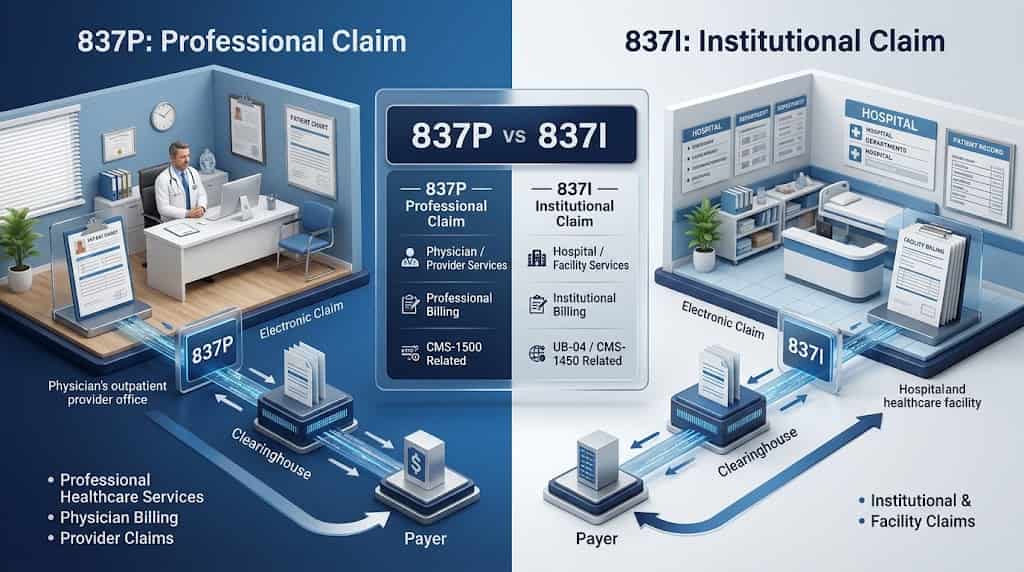
Professional Medical Claims (837P)
The 837P is used to submit professional healthcare claims electronically. It generally applies when an individual practitioner or professional provider bills for services rendered.
Common users include:
- Physicians and specialists
- Nurse practitioners and physician assistants
- Physical and occupational therapists
- Independent laboratories
- Ambulance suppliers
- Durable medical equipment suppliers
- Private practices and professional medical groups
Professional claims commonly include CPT or HCPCS procedure codes, applicable modifiers, diagnosis information, service dates, and place of service codes.
The 837P is the electronic transaction counterpart to the paper CMS-1500 claim form. However, the electronic transaction contains structured data and is not identical to the paper form.
Example: A physician evaluates a patient in an outpatient office and bills the insurance company for the professional service. The provider or billing organization may submit an 837P claim, depending on the applicable payer requirements.
Institutional Medical Claims (837I)
The 837I is used for institutional healthcare claims. It generally applies when a healthcare facility bills for facility services, resources, and related charges.
Common users include:
- Hospitals
- Skilled nursing facilities
- Home health agencies
- Hospices
- Ambulatory surgical centers
- Other eligible institutional healthcare providers
Institutional claims commonly include revenue codes, applicable procedure codes, type of bill information, statement periods, and facility-related details. Inpatient claims may also contain admission information, discharge status, and other data required by the payer.
The 837I is the electronic transaction counterpart to the paper UB-04, also known as CMS-1450.
Example: A hospital provides an outpatient procedure and bills the payer for its facility services. The hospital may submit an 837I claim for those charges while the physician separately bills for professional services using an 837P, when applicable.
Dental Claims (837D)
The 837D is used for electronic dental claim submissions. It supports the information needed by dental providers and payers to process claims for covered dental services.
Common users include:
- General dentists
- Dental specialists
- Dental clinics
- Other eligible dental providers
Dental claims may contain tooth numbers, dental procedure codes, service details, provider information, and other data required by the dental payer.
Example: A dental practice submits a claim for a covered dental procedure using the electronic format accepted by the patient’s dental insurance plan.
Electronic Medical Claims: Professional vs. Institutional
Although professional and institutional claims are both used to request insurance reimbursement, they serve different billing purposes.
| Feature | Professional Claim (837P) | Institutional Claim (837I) |
|---|---|---|
| Main purpose | Bills for professional services | Bills for facility services |
| Common providers | Physicians and practitioners | Hospitals and healthcare facilities |
| Paper counterpart | CMS-1500 | UB-04 (CMS-1450) |
| Common coding information | CPT/HCPCS codes and modifiers | Revenue codes and applicable procedure codes |
| Service location information | Place of service codes | Facility and institutional claim information |
| Billing period | Commonly reports individual service dates | May report a statement period |
| Additional information | Professional provider and service details | Type of bill, admission, and discharge information when applicable |
The correct claim format depends on the billing entity, the services being billed, and payer requirements. The location alone does not determine the claim format.
For example, a surgeon working in a hospital may bill professional services separately from the hospital’s facility charges. The surgeon’s services may be submitted on an 837P, while the hospital’s facility charges may be submitted on an 837I.
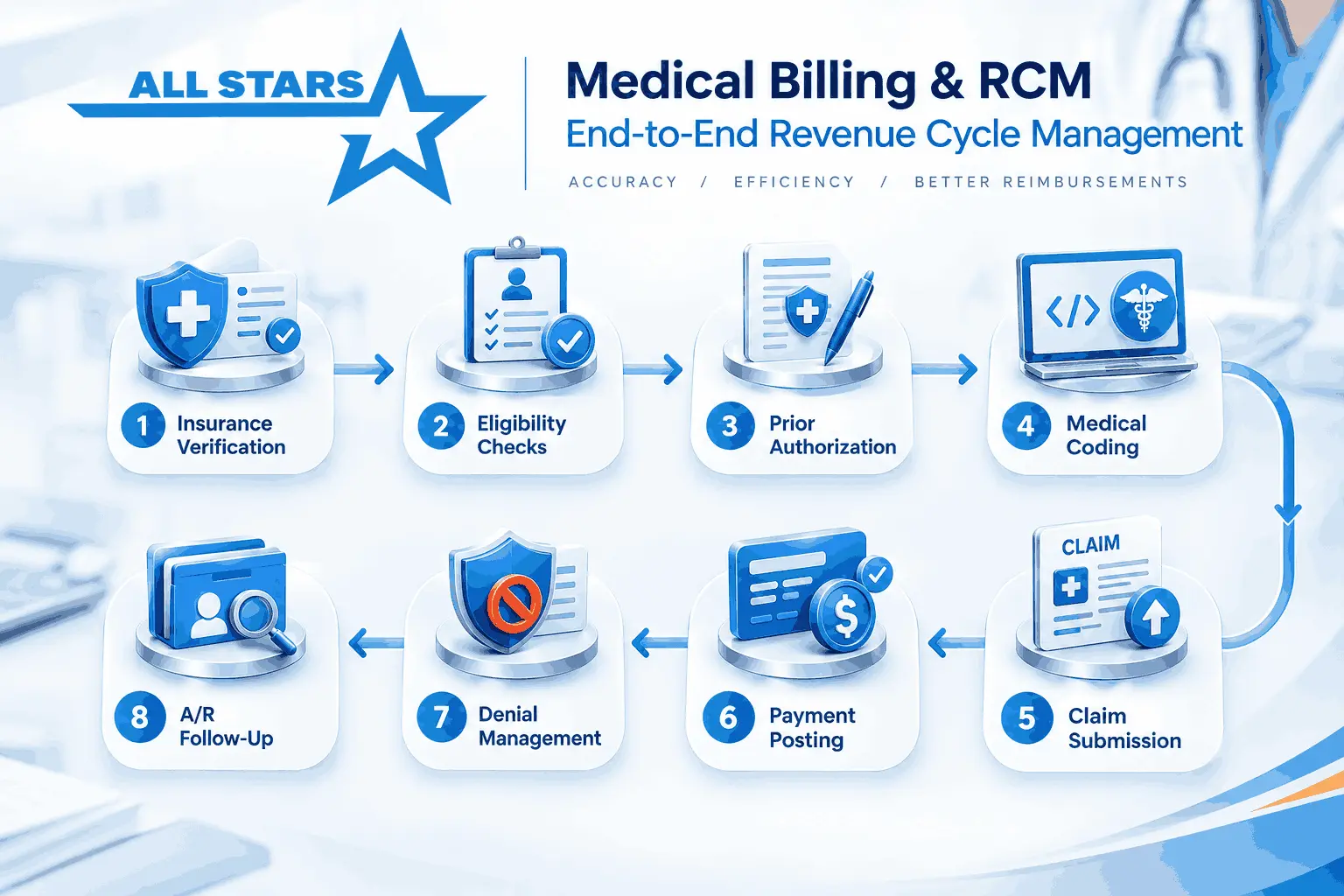
How the Electronic Medical Claims Process Works
Electronic medical claims move through several stages before the provider receives reimbursement. A consistent workflow helps reduce errors and gives billing teams more control over claim processing.
Verify Patient Eligibility and Benefits
Before submitting a claim, the billing team should verify the patient’s insurance coverage for the date of service.
This process may include checking:
- Active insurance coverage
- Member ID and subscriber information
- Covered services and benefits
- Copayments, deductibles, and coinsurance
- Referral requirements
- Prior authorization requirements
Eligibility verification helps identify potential coverage issues before they affect reimbursement. However, eligibility confirmation does not guarantee that a service will be covered or paid.
Document Services and Assign Codes
After the patient receives care, the provider documents the services performed. The coding team reviews the documentation and assigns the appropriate diagnosis and procedure codes.
Accurate coding helps ensure that the claim represents the services provided and meets applicable payer requirements.
Coding errors, unsupported services, missing modifiers, and incorrect diagnosis information can lead to rejections, denials, or payment delays.
Enter Charges and Prepare the Claim
The billing team enters the charges and confirms that the required information is complete.
This may involve checking patient demographics, provider identifiers, service dates, billed amounts, and other claim details. Institutional claims may require additional facility-specific information.
Scrub the Claim for Errors
Before submission, electronic medical claims should be reviewed using billing software or claim-scrubbing tools.
A claim scrubber may identify:
- Missing or invalid fields
- Incorrect provider identifiers
- Inconsistent diagnosis and procedure codes
- Missing modifiers
- Invalid place of service information
- Potential duplicate claims
- Payer-specific formatting issues
Resolving these problems before submission can reduce avoidable rejections and rework.
Submit the Claim Electronically
The provider or billing company transmits the claim directly to the payer or through a medical billing clearinghouse. A clearinghouse can check claim data against applicable edits, identify certain errors, and route claims to the appropriate payer. However, passing clearinghouse edits does not guarantee that the insurance company will approve the claim.
Monitor Claim Acceptance and Status
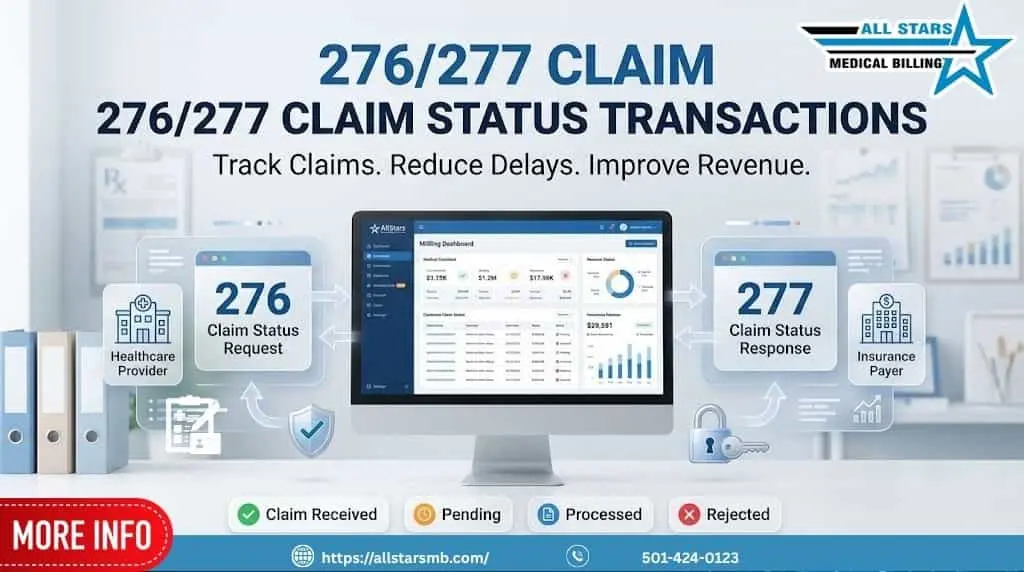
After submission, the billing team should confirm whether the claim was accepted for processing and monitor its status. Electronic acknowledgments and claim status transactions can help identify whether a claim was received, rejected, remains pending, or has progressed further through adjudication. Claims that require corrections should be addressed promptly to prevent unnecessary delays.
Review Payments and Remittance Advice
Once the payer processes the claim, the provider reviews the payment and the explanation of how the claim was adjudicated. Electronic remittance advice, commonly transmitted using the 835 transaction, can explain payment amounts, contractual adjustments, patient responsibility, and applicable denial or adjustment reasons. The billing team posts payments, reconciles balances, and identifies underpayments or outstanding amounts for follow-up.
Manage Denials and Outstanding Claims
If a claim is denied or remains unpaid, the billing team investigates the underlying reason. Depending on the situation, the next step may involve correcting the claim, submitting additional documentation, filing an appeal, or contacting the payer. Timely follow-up helps protect reimbursement opportunities and supports a healthier accounts receivable cycle.
Common Electronic Medical Claims Errors
Even when claims are submitted electronically, errors can still disrupt the reimbursement process. Identifying recurring problems helps billing teams improve claim quality.
Incorrect Patient Information
Misspelled names, incorrect dates of birth, invalid member IDs, and mismatched subscriber information can cause claims to fail payer validation. Verify patient and insurance information during registration and before claim submission.
Eligibility and Coverage Errors
A claim may be rejected or denied when coverage is inactive, the wrong payer is selected, or the service is not covered under the patient’s plan. Perform eligibility verification for the relevant date of service and review applicable benefit requirements.
Incorrect Diagnosis or Procedure Codes
Coding errors can create inconsistencies between the medical record and the services billed. Follow current coding guidelines and ensure that submitted codes are supported by the documentation.
Missing Modifiers or Incorrect Place of Service
Professional claims may require appropriate modifiers and accurate place of service information. Missing or incorrect values can trigger claim edits or affect payment. Establish coding review procedures and keep staff informed about payer-specific requirements.
Invalid Revenue Codes or Type of Bill
Institutional claims may be affected by incorrect revenue codes, incompatible procedure information, or an invalid type of bill. Review institutional billing requirements and maintain accurate charge descriptions and claim configuration.
Missing Prior Authorization
Certain services require prior authorization or referrals. A claim may be denied if the required approval is missing or the authorization details do not match the billed service. Confirm authorization requirements before the service and verify that the approval covers the appropriate service, provider, and dates.
Duplicate Claim Submissions
Submitting the same claim more than once without following the payer’s correction or replacement procedures can create processing complications. Check claim status before resubmitting and follow payer-specific instructions for corrected or replacement claims.
Timely Filing Issues
Claims submitted after a payer’s filing deadline may be denied, subject to the applicable rules and exceptions. Track filing deadlines and monitor claims that have not been accepted or processed.
Best Practices for Accurate Electronic Medical Claims
Healthcare organizations can improve claim quality by implementing consistent processes across registration, coding, billing, and follow-up.
Verify Information Before Every Submission
Confirm patient demographics, payer details, provider identifiers, and service information before sending a claim. Accurate information at the beginning of the process reduces avoidable errors later.
Use Automated Claim Scrubbing
Automated billing tools can identify missing data, coding conflicts, and formatting issues before a claim reaches the payer. Keep claim edits updated to reflect relevant payer requirements.
Maintain Accurate Coding
Coding staff should follow current official guidelines and payer policies. Regular training and documentation reviews can help prevent repeated coding errors.
Monitor Rejections and Denials Separately
A rejection generally means a claim did not pass an initial validation or processing requirement. A denial generally means the payer adjudicated the claim and did not approve payment for all or part of it. Track these outcomes separately because they may require different corrective actions.
Review Accounts Receivable Regularly
Monitor unpaid claims, aging balances, underpayments, and unresolved denials. Assign follow-up responsibilities and document the action taken on each account.
Use Electronic Claim Status and Remittance Tools
Electronic claim status inquiries and electronic remittance advice can help billing teams reduce manual work, track claim progress, and reconcile payments more efficiently.
Audit Billing Performance
Regular audits can uncover patterns such as frequent eligibility errors, recurring coding problems, high rejection rates, and delayed follow-up. Use the findings to improve workflows and staff training.
Benefits of Electronic Medical Claims
Electronic medical claims offer several operational advantages when supported by accurate data and effective billing processes.
Faster information exchange: Electronic transactions allow providers, clearinghouses, and payers to exchange claim information without relying entirely on paper forms.
Improved workflow efficiency: Automated submission, validation, and status tracking can reduce repetitive administrative work.
Better error identification: Electronic claim edits can identify certain problems before submission, giving billing teams an opportunity to correct them earlier.
Greater claim visibility: Electronic acknowledgments and status inquiries help staff monitor whether claims have been received and processed.
More organized payment reconciliation: Electronic remittance advice helps billing teams review payment decisions and post adjustments.
Stronger revenue cycle management: When combined with accurate coding, eligibility checks, and timely follow-up, electronic claim workflows can support more consistent reimbursement operations.
What are electronic medical claims?
Electronic medical claims are structured digital transactions that healthcare providers submit to insurance payers to request payment for medical services. They include information such as patient details, provider identifiers, diagnosis codes, procedure codes, and charges.
What are the main types of electronic medical claims?
The main HIPAA-standardized 837 healthcare claim formats are:
837P: Professional healthcare claims
837I: Institutional healthcare claims
837D: Dental healthcare claims
What is the difference between 837P and 837I?
The 837P is generally used for professional services billed by physicians and other practitioners. The 837I is generally used for institutional services billed by hospitals and other healthcare facilities.
What is a medical billing clearinghouse?
A medical billing clearinghouse receives electronic claims from providers or billing organizations, checks them against applicable edits, and routes them to the appropriate payer. It can identify certain errors before submission to the insurer, but it cannot guarantee claim approval.
Improve Your Electronic Medical Claims Process with AllStars Medical Billing
Managing electronic medical claims requires more than submitting information through a billing system. Healthcare providers must also maintain accurate patient records, verify insurance coverage, follow coding requirements, monitor claim status, and resolve payment issues promptly.
AllStars Medical Billing & IT Services supports healthcare providers with medical billing and revenue cycle management services, including claim submission, claim follow-up, denial management, payment posting, and accounts receivable support.
Our goal is to help medical practices improve billing accuracy, strengthen revenue cycle workflows, and spend less time managing administrative challenges.
If your practice needs support with electronic medical claims or a more organized medical billing process, explore our services to learn how AllStars can help.
Learn more: https://allstarsmb.com/