
Just completing processing of your claim does not mean that the payment is only half the deal. It is much more important for you to receive an explanation along with it – what was billed, what was allowed, what was paid, what was adjusted, and who needs to pay the balance. This explanation in the United States of America is sent in the standardized format in an electronic file 835 (Electronic Remittance Advice).
The 835 ERA is one of the most underutilized data sources for most of the practices during the revenue cycle process. Utilization of the 835 ERA file effectively increases the speed of posting payment and highlights underpayments and denial reason. However, utilization improperly can make it into just another file that will be posted manually line by line. The following guide will show you how 835 ERA works, how it looks like, recent industry data, and how to get the best out of each remittance.
What Is an 835 ERA Transaction?
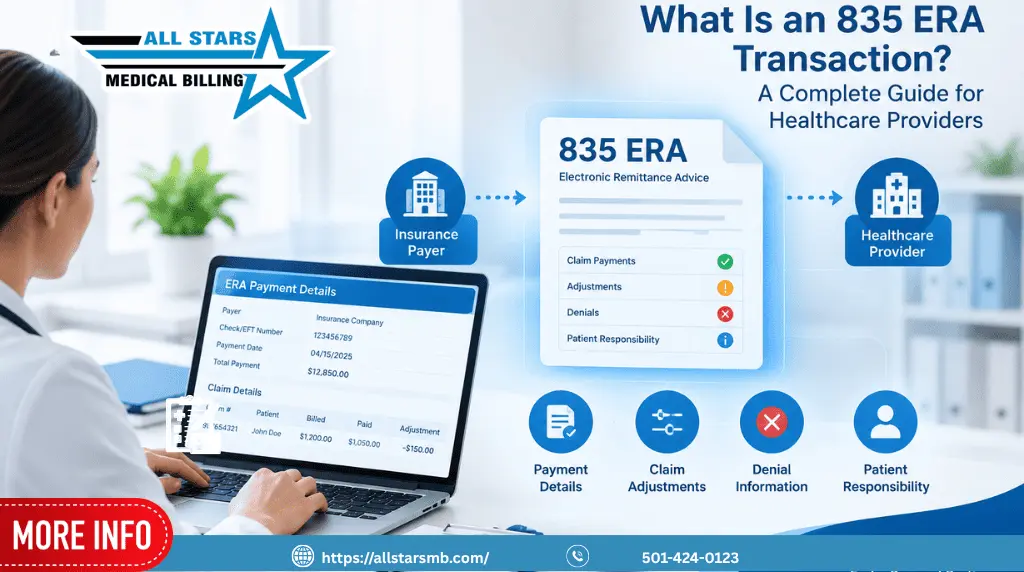
The 835 is the HIPAA-standard electronic transaction that health plans use to send payment and adjustment details to providers. It is built on the ASC X12 standard and uses the HIPAA 5010 version. Think of it as the electronic version of the paper Explanation of Payment (EOP) or Explanation of Benefits (EOB) that payers have traditionally mailed to practices.
An ERA reports, claim by claim and often line by line:
- Who the payer and payee are
- The patient, claim, and service details that were adjudicated
- The amount billed, allowed, and paid
- Every adjustment, with a code explaining why
- The patient’s responsibility (copay, coinsurance, deductible)
- Any provider-level adjustments, such as recoupments or interest
Because it is structured data rather than a PDF or paper statement, the 835 can be read by billing software and posted automatically.
ERA vs EFT: What’s the Difference?
These two terms are often confused, but they do different jobs:
- EFT (Electronic Funds Transfer) is the money itself, deposited into your bank account.
- ERA (835) is the explanation of that money: which claims it covers and how each was paid or adjusted.
How the 835 ERA Process Works
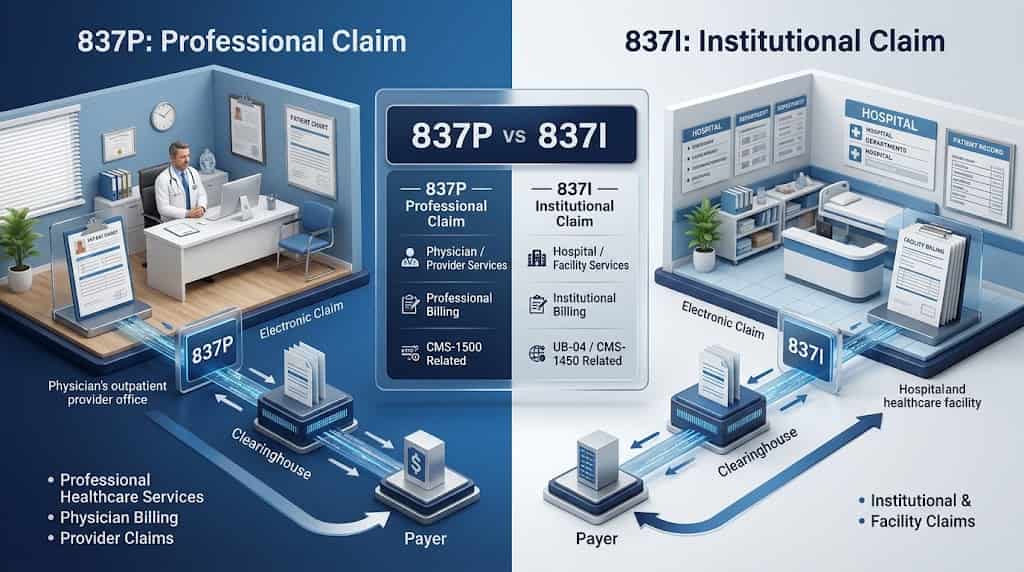
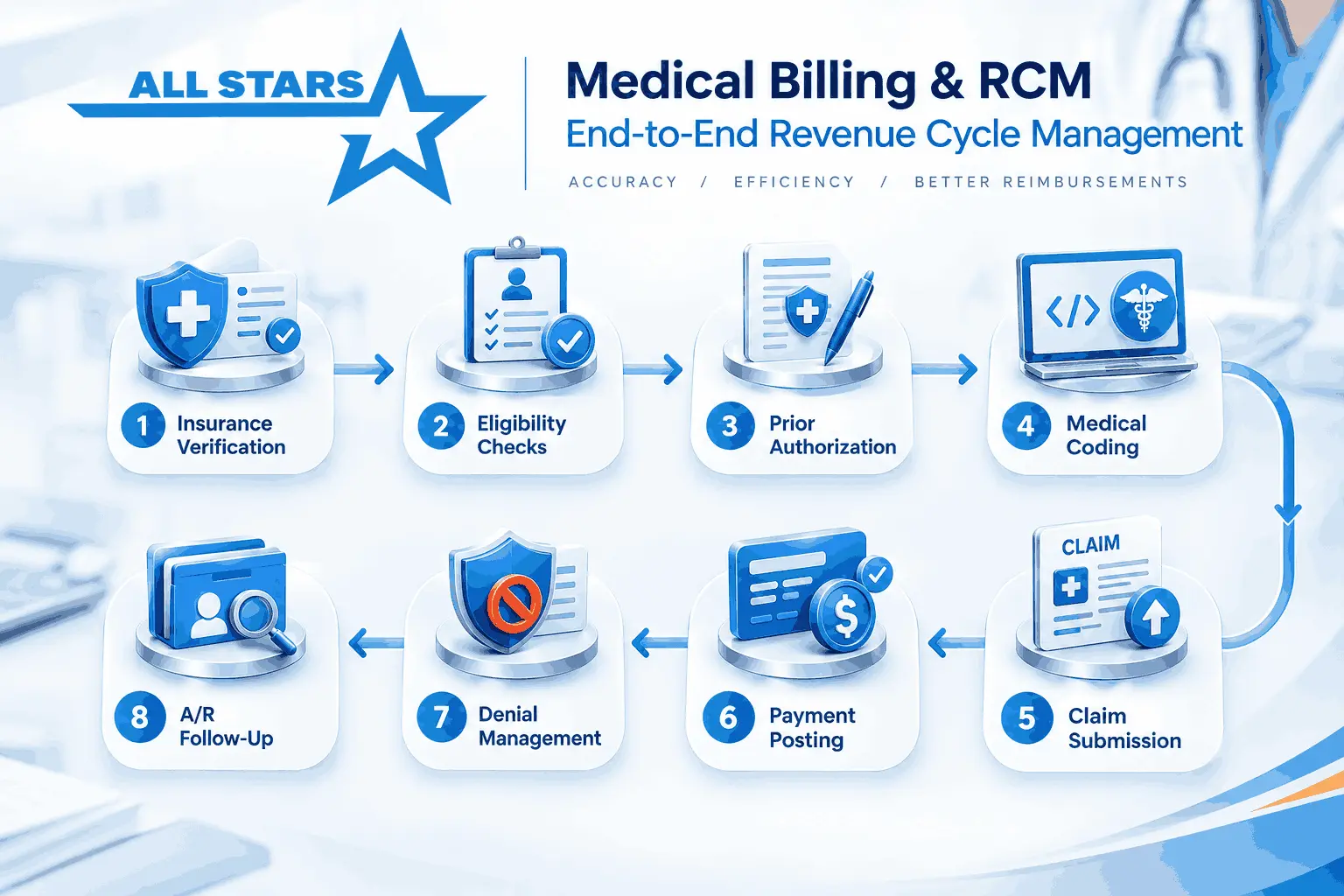
- Claim submission. The provider sends an 837 claim to the payer.
- Adjudication. The payer reviews the claim against eligibility, benefits, contract rates, and medical policy.
- Payment and remittance creation. The payer issues payment and generates the 835 file explaining the outcome.
- Delivery. The ERA is delivered to the provider through a clearinghouse or a payer portal. The EFT is sent to the provider’s bank.
- Reassociation. The practice or its billing system matches the ERA to the bank deposit.
- Payment posting. Payments, contractual adjustments, and patient balances are posted to each account, often automatically.
- Follow-up. Denials, underpayments, and patient balances are routed to the right work queue.
Key Parts of an 835 ERA
You don’t need to read raw X12 to benefit from understanding its structure. These are the sections that matter most:
| Segment | What it tells you |
|---|---|
| BPR | The financial information: total payment amount and payment method |
| TRN | The trace number used to match the ERA to the deposit |
| CLP | Claim-level payment: status, amount billed, amount paid, patient responsibility |
| CAS | Adjustments, each with a group code, reason code, and amount |
| SVC | Service-line detail: procedure code, billed amount, and paid amount |
| PLB | Provider-level adjustments not tied to a single claim, such as recoupments or interest |
Understanding Adjustment Codes: CAGC, CARC, and RARC
Adjustments are where the 835 ERA delivers its most useful information. Each adjustment is explained with up to three layers of codes:
Claim Adjustment Group Codes (CAGC) show who is financially responsible for the adjusted amount:
- CO (Contractual Obligation): the provider’s write-off under the contract
- PR (Patient Responsibility): an amount that can be billed to the patient
- OA (Other Adjustment): adjustments that don’t fit the other groups
- PI (Payer Initiated): reductions the payer chose to make
Claim Adjustment Reason Codes (CARC) explain why the payment differs from the billed amount. There are hundreds of CARCs, covering everything from missing information to bundling and timely filing.
Remittance Advice Remark Codes (RARC) add supplemental detail to a CARC, often explaining what is missing or what action is needed.
Reading these three together is how a biller tells the difference between a routine contractual write-off and a denial worth appealing.
The Latest Data on 835 ERA, Electronic Transactions, and Denials
- According to the 2025 CAQH Index, about 78% of claim payments in the medical industry are now handled electronically, which puts the 835 and EFT at the center of payment workflows, yet roughly one in five still depends on partly or fully manual handling.
- A manual transaction costs a medical provider about $8.03 on average, compared with $2.65 for an electronic one, based on CAQH data published in 2026.
- CAQH estimates that moving the remaining manual and partly manual work to fully electronic methods could save the medical industry about $18.7 billion annually, and roughly $20 billion or more across medical and dental.
- The same research estimates that electronic transactions and better data exchange have already helped the U.S. healthcare system avoid about $258 billion in administrative costs.
- A manual claim status inquiry costs roughly $16 and can consume up to 24 minutes of staff time, which is exactly the kind of work a well-used ERA can reduce, since it already tells you how the claim was resolved.
- Industry-wide initial claim denial rates are around 12% in 2026, and about 41% of providers report denial rates of 10% or higher, so denial intelligence from the ERA has never been more valuable.
- There are over 300 CARCs in use, and federal operating rules require health plans, including Medicare, to follow a standardized list of approved code combinations, which is updated each year to reflect real-world payer usage.
Common 835 ERA Problems That Cost Practices Money
- Manual posting. Manual entry of payment data is a time-consuming process, as well as being inefficient and potentially inaccurate since automation reveals patterns that manual processes don’t.
- Unmatched deposits. Deposits received via EFT without any correlation to ERA remain unused.
- Misclassified adjustments. Classifying a patient’s responsibility charge as a contractual adjustment (and vice versa) causes inaccuracies both in revenue and patient charges.
- Underpayments that are overlooked. Not comparing the actual payments made with the contracted prices leads to missed underpayments.
- Unrouted denials. Codes CARC and RARC, which never cause any action, result in appealable revenue left unaccounted.
- Overlooked provider level adjustments. Adjustments, takebacks, and recoupments on PLB sections could be easily overlooked and result in incorrect reconciliation.
- Enrollment issues. If the practice is not enrolled for 835 ERA processing, they have to read paper ERA documentation.
How to Get More Value from Your 835 ERAs
Enroll with every payer for ERA and EFT Make sure each payer you bill sends electronic remittances and electronic payments to the right billing entity and account.
Automate payment posting Auto-posting removes the keystrokes that slow down posting and introduce errors, and frees staff for exceptions.
Reconcile ERA totals to deposits every day Confirm that the payments in each ERA add up to the amount that hit your bank, and investigate differences immediately.
Map adjustment codes to workflows Set rules so specific CARC and RARC combinations create tasks automatically: appeal, resubmit, bill the patient, or write off.
Compare payments to contracted rates Use ERA data to flag underpayments and bring them to payers before appeal windows close.
Track denials by code and payer Patterns in the ERA show which payers, services, and front-end errors cost you the most.
Watch provider-level adjustments Review PLB entries so recoupments, interest, and forwarding balances are accounted for.
Keep your clearinghouse and software current Code sets and payer rules change. Your posting rules need to change with them.
Consider a specialized billing partner Practices without the staff time to post, reconcile, and work every ERA often get better results by handing this work to an experienced billing team.
What does 835 mean in medical billing?
835 is the number of the HIPAA-standard electronic transaction used for healthcare claim payment and remittance advice. It is the electronic version of the explanation of payment a health plan sends after processing a claim.
Is an ERA the same as an EOB?
They carry similar information but go to different audiences. An ERA goes to the provider and explains payment and adjustments in a machine-readable format. An EOB is sent to the patient and explains how their benefits were applied.
What is the difference between an 835 and an 837?
The 837 is the claim that a provider sends to a payer. The 835 is the payer’s response explaining how that claim was paid or adjusted.
How do I match an ERA to an EFT payment?
Use the reassociation trace number. The ERA contains it, and the same number accompanies the electronic payment, so your billing system or bank portal can pair them.
What are CARC and RARC codes?
CARCs (Claim Adjustment Reason Codes) explain why a claim or line was paid differently than billed. RARCs (Remittance Advice Remark Codes) provide additional detail or required follow-up actions. Group codes such as CO and PR tell you who is responsible for the adjusted amount.
Can I receive ERAs from every payer?
Most major payers offer ERAs, but you typically need to enroll with each payer, often through your clearinghouse. Some smaller payers may still send paper remittances.
Turn Every Remittance into Revenue with Allstars Medical Billing
An ERA is more than a payment receipt. It is a detailed report card on every claim you submit. Practices that post it accurately, reconcile it daily, and act on its denial codes collect more, faster.
Allstars Medical Billing helps healthcare providers manage the full payment cycle, from claim submission and ERA posting to denial follow-up and appeals, so nothing slips through the cracks and every dollar you’ve earned is accounted for.
👉 Talk to Allstars Medical Billing about faster, cleaner payment posting