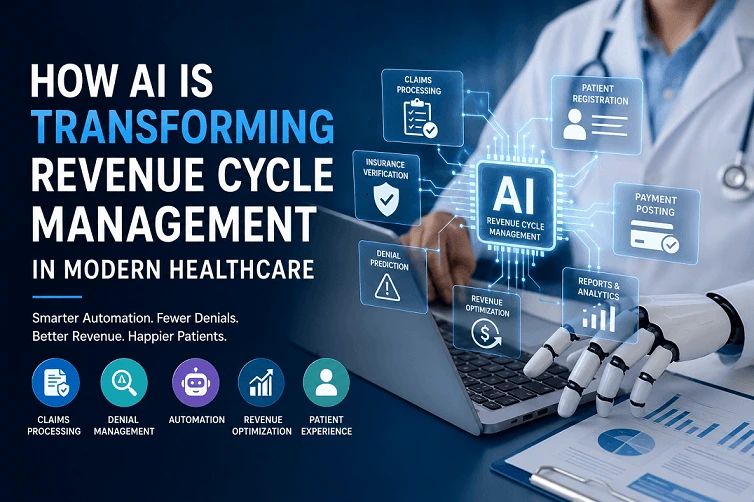
How AI Is Transforming Revenue Cycle Management in Modern Healthcare
AI in Revenue Cycle Management is rapidly changing the way healthcare organizations handle billing, claims processing, payment collections, and financial operations. As healthcare systems face increasing administrative burdens, staffing shortages, and rising operational costs, artificial intelligence is emerging as a powerful solution that helps providers improve efficiency while maintaining financial stability.
Revenue Cycle Management (RCM) covers every financial interaction between healthcare providers and patients, from appointment scheduling and insurance verification to claim submission and final payment collection. Traditionally, many of these processes required extensive manual work, making them vulnerable to errors, delays, and revenue leakage.
Today, AI-driven technologies are helping healthcare organizations automate repetitive tasks, reduce claim denials, enhance patient satisfaction, and improve overall financial performance. While there are still challenges to overcome, the benefits of AI are becoming impossible to ignore.
What Is Revenue Cycle Management?
Revenue Cycle Management is the process healthcare providers use to manage patient revenue throughout the entire care journey.
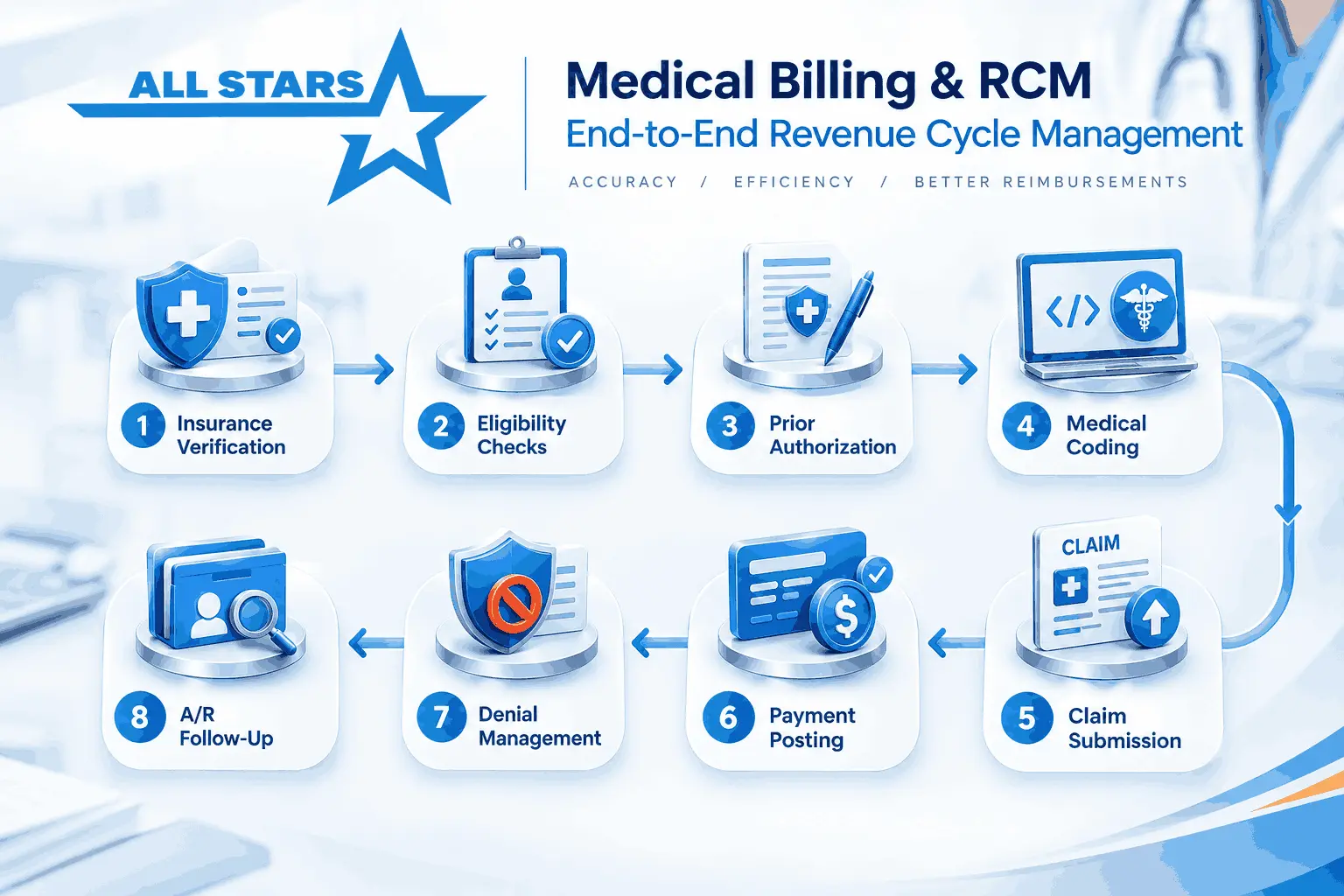
The revenue cycle typically includes:
- Patient registration
- Insurance verification
- Medical coding
- Charge capture
- Claims submission
- Payment processing
- Denial management
- Accounts receivable follow-up
When any part of this cycle experiences delays or inaccuracies, healthcare organizations can face serious financial consequences. This is where AI in Revenue Cycle Management is making a significant impact.
Why Healthcare Organizations Are Adopting AI
Healthcare providers generate massive amounts of data every day. Managing this information manually can be time-consuming and costly.
Several factors are driving AI adoption in healthcare finance:
- Increasing claim denial rates
- Administrative inefficiencies
- Workforce shortages
- Rising healthcare costs
- Growing patient expectations
- Complex insurance regulations
AI helps healthcare organizations address these challenges by improving accuracy, speed, and decision-making capabilities.
How AI Is Improving Claims Processing
One of the most valuable applications of AI in Revenue Cycle Management is claims processing.
Traditional claims management often involves reviewing large volumes of patient data, insurance requirements, and coding information. Human errors can result in denied or delayed claims, negatively impacting cash flow.
AI systems can:
- Analyze claims before submission
- Identify coding inconsistencies
- Detect missing documentation
- Predict claim rejection risks
- Recommend corrections automatically
As a result, healthcare providers can submit cleaner claims and receive reimbursements faster.
Benefits of AI-Powered Claims Processing
- Reduced claim denials
- Faster reimbursement cycles
- Improved billing accuracy
- Lower administrative costs
- Better revenue recovery
AI-Powered Medical Coding and Documentation
Medical coding is one of the most critical aspects of healthcare revenue management. Incorrect coding can lead to compliance risks, denied claims, and lost revenue.
Artificial intelligence uses Natural Language Processing (NLP) to review clinical documentation and recommend accurate medical codes.
AI-driven coding tools can:
- Extract information from physician notes
- Suggest ICD and CPT codes
- Identify documentation gaps
- Improve coding consistency
This reduces the burden on healthcare staff while improving coding precision.
Enhancing Denial Management with Predictive Analytics
Claim denials remain one of the biggest challenges in healthcare finance.
Many healthcare organizations lose substantial revenue due to preventable denials caused by incomplete documentation, eligibility issues, or coding mistakes.
AI-powered predictive analytics can identify patterns in historical claims data and forecast potential denial risks before claims are submitted.
This proactive approach allows revenue cycle teams to:
- Identify high-risk claims.
- Correct errors early.
- Reduce appeal workloads.
- Improve collection rates.
By preventing denials rather than reacting to them, providers can significantly improve their financial performance.
Improving Patient Financial Experiences
Patients today expect the same level of convenience from healthcare providers that they receive from other industries.
AI is helping healthcare organizations create more transparent and patient-friendly billing experiences.
Examples include:
- Automated payment reminders
- Personalized payment plans
- Cost estimation tools
- Virtual financial assistants
- Real-time billing support
These solutions help patients understand their financial responsibilities and reduce confusion surrounding medical bills.
A better patient financial experience often leads to higher satisfaction and improved payment collection rates.
Automating Administrative Tasks
Administrative processes account for a significant portion of healthcare operating expenses.
AI can automate repetitive tasks such as:
- Insurance eligibility verification
- Appointment scheduling
- Prior authorization workflows
- Payment posting
- Accounts receivable management
Automation allows healthcare professionals to focus on patient care rather than paperwork.
The result is increased productivity, lower operational costs, and reduced staff burnout.
Fraud Detection and Compliance Monitoring
Healthcare fraud remains a serious concern across the industry.
AI systems can analyze large datasets and identify suspicious billing activities that may indicate fraud, waste, or abuse.
AI tools can detect:
- Duplicate claims
- Unusual billing patterns
- Upcoding practices
- Compliance violations
Early detection helps healthcare organizations minimize financial losses while maintaining regulatory compliance.
Challenges of Implementing AI in Revenue Cycle Management
Although AI offers many advantages, implementation is not without challenges.
Some common obstacles include:
Data Quality Issues
AI systems depend on accurate data. Poor-quality information can reduce performance and produce unreliable results.
Initial Investment Costs
Implementing advanced AI solutions may require substantial upfront investment in software, infrastructure, and training.
Workforce Adaptation
Some employees may resist new technologies due to concerns about job security or workflow changes.
Privacy and Security Concerns
Healthcare organizations must ensure that AI systems comply with strict data privacy regulations and cybersecurity standards.
Despite these challenges, the long-term benefits often outweigh the initial difficulties.
The Future of AI in Healthcare Revenue Cycle Management
The future of AI in Revenue Cycle Management looks incredibly promising.
Emerging technologies are expected to provide:
- More advanced predictive analytics
- Fully automated claims workflows
- Enhanced revenue forecasting
- Intelligent patient engagement platforms
- Real-time decision support systems
As machine learning algorithms continue to evolve, healthcare organizations will gain deeper insights into their financial operations and unlock new opportunities for revenue optimization.
Healthcare leaders who invest in AI today are likely to be better positioned for future growth and competitiveness.
Conclusion
AI in Revenue Cycle Management is transforming modern healthcare by improving efficiency, reducing errors, accelerating reimbursements, and enhancing patient experiences. From automated claims processing and predictive denial management to intelligent medical coding and fraud detection, artificial intelligence is helping healthcare organizations overcome some of their most complex financial challenges.
While implementation may involve certain costs and adjustments, the long-term advantages are substantial. Organizations that embrace AI-driven revenue cycle solutions can improve operational performance, strengthen financial stability, and deliver better experiences for both patients and staff.
Embrace the Future of Revenue Cycle Management
Looking to improve operational efficiency, reduce claim denials, and enhance financial performance? AI-powered Revenue Cycle Management solutions can help healthcare organizations streamline processes, increase revenue capture, and deliver better patient experiences. As healthcare continues to evolve, embracing AI today can position your organization for long-term success and sustainable growth.