Top Medical Billing Challenges Healthcare Providers Face in 2026 (And How to Solve Them)
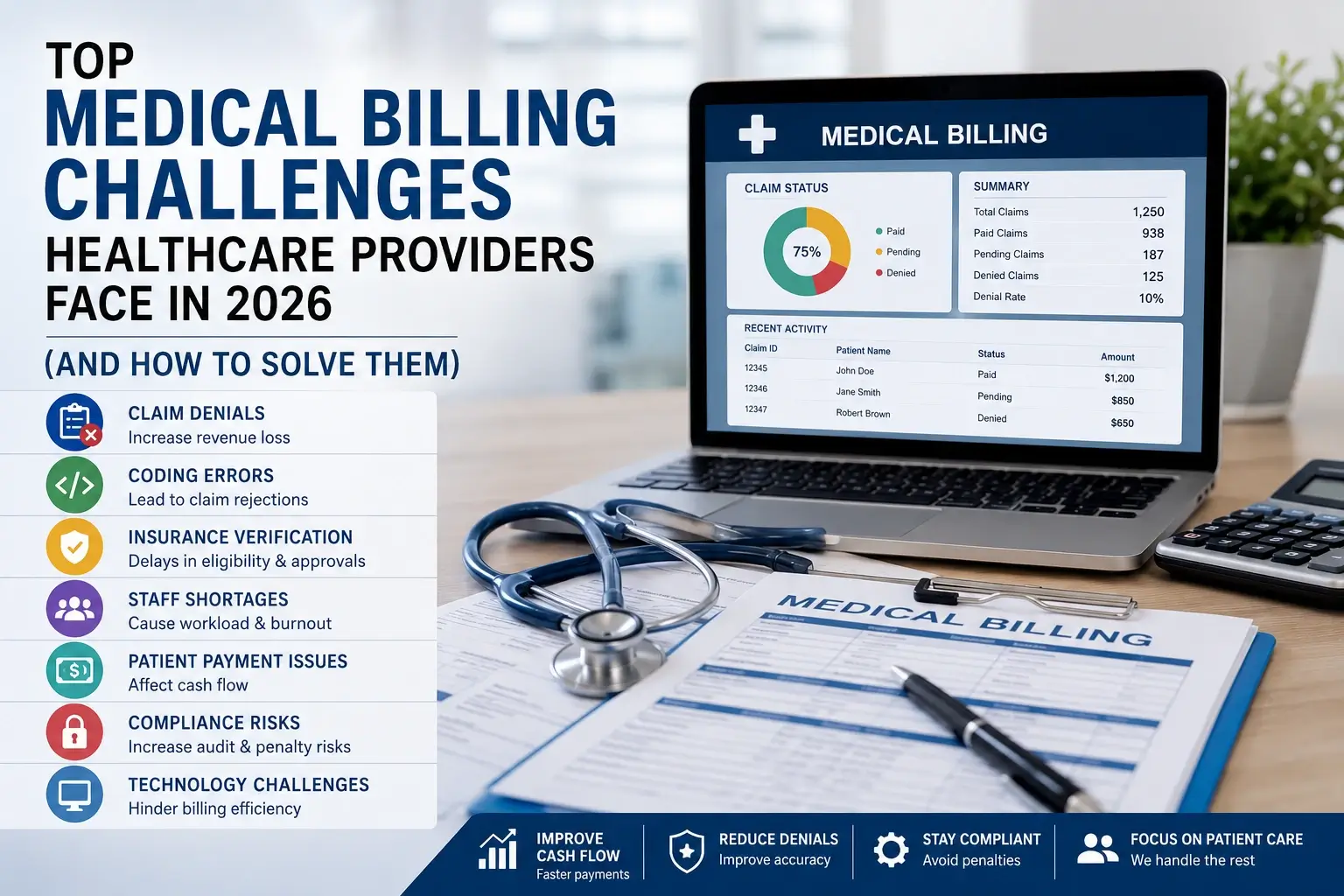
Medical Billing Challenges continue to create serious financial and operational pressure for healthcare providers in 2026. From rising claim denials to changing insurance regulations and coding complexities, clinics and medical practices are struggling to maintain healthy cash flow while delivering quality patient care.
The healthcare industry is evolving rapidly, and medical billing is becoming more complicated than ever before. Even a small billing mistake can lead to delayed reimbursements, frustrated patients, compliance risks, and significant revenue loss.
The good news is that these problems are manageable with the right strategies, technology, and billing support. In this guide, we’ll explore the top medical billing challenges healthcare providers face in 2026 and discuss practical ways to solve them efficiently.
Why Medical Billing Is Becoming More Complex in 2026
Healthcare providers are dealing with stricter payer rules, increased patient expectations, and constant coding updates. At the same time, insurance companies are becoming more aggressive with audits and claim reviews.
Some major reasons behind rising medical billing challenges include:
- Frequent changes in insurance policies
- Increasing claim denial rates
- Staffing shortages in healthcare administration
- Complex ICD-10 and CPT coding updates
- Growing compliance requirements
- Higher patient billing responsibilities
- Integration issues with EHR systems
Without an optimized billing process, practices can experience delayed payments and declining profitability.
1. Rising Claim Denials
One of the biggest medical billing challenges in 2026 is the sharp increase in claim denials. Insurance companies are implementing stricter verification systems, making it easier for claims to be rejected for even minor errors.
Common Reasons for Claim Denials
- Incorrect patient information
- Missing documentation
- Invalid medical codes
- Lack of prior authorization
- Duplicate billing
- Timely filing issues
Denied claims can seriously affect a healthcare provider’s revenue cycle and consume valuable administrative time.
How to Solve It
Healthcare providers can reduce claim denials by:
- Verifying insurance eligibility before appointments
- Conducting regular coding audits
- Using automated claim scrubbing software
- Training staff on updated payer requirements
- Monitoring denial trends monthly
Investing in professional medical billing services can also significantly improve claim acceptance rates.
2. Frequent Coding Errors
Medical coding errors remain a costly problem for healthcare organizations. With regular updates to CPT, ICD-10, and HCPCS codes, staying compliant is becoming increasingly difficult.
Even experienced billing teams may struggle with coding accuracy due to workload pressure and evolving regulations.
Impact of Coding Errors
Coding mistakes can lead to:
- Claim rejections
- Compliance penalties
- Delayed reimbursements
- Revenue leakage
- Audit risks
Incorrect coding not only affects payments but can also damage a provider’s reputation.
How to Solve It
To reduce coding-related medical billing challenges:
- Provide ongoing coder training
- Use AI-powered coding assistance tools
- Conduct internal coding audits
- Hire certified medical coders
- Stay updated on yearly coding changes
Accurate medical coding improves reimbursement speed and minimizes costly errors.
3. Insurance Verification Delays
Insurance verification has become more complicated due to changing policies, pre-authorization requirements, and expanded patient coverage options.
Failure to verify insurance properly can result in unpaid claims and unhappy patients.
Common Verification Problems
- Expired insurance plans
- Incorrect policy details
- Eligibility misunderstandings
- Authorization delays
- Coverage limitations
These issues often lead to unexpected billing disputes and payment delays.
How to Solve It
Healthcare providers should implement:
- Real-time insurance verification systems
- Automated eligibility checks
- Front-desk staff training
- Pre-visit verification procedures
- Better communication with patients
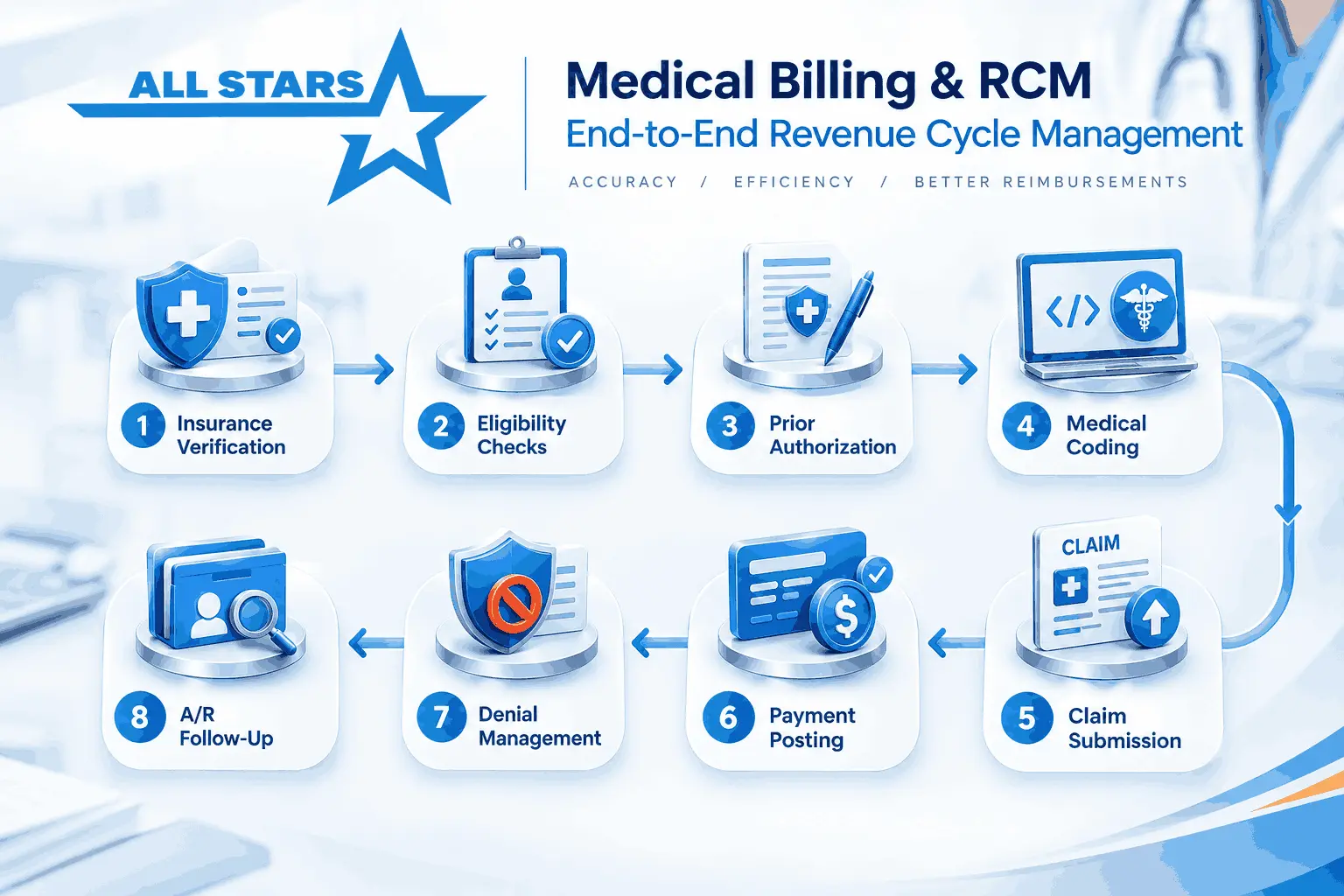
Efficient verification processes reduce administrative stress and improve revenue cycle management.
4. Staffing Shortages and Burnout
The healthcare industry continues to face staffing shortages in both clinical and administrative departments. Medical billing staff are often overwhelmed by high workloads and complicated billing procedures.
Burnout can increase billing mistakes, lower productivity, and negatively impact patient satisfaction.
Signs of Billing Staff Burnout
- Increased billing errors
- Missed deadlines
- Slow claim processing
- Poor communication
- Employee turnover
This challenge can become extremely costly if left unresolved.
How to Solve It
Healthcare providers can improve operations by:
- Outsourcing medical billing services
- Automating repetitive tasks
- Offering staff training and support
- Using cloud-based billing software
- Reducing manual data entry
Outsourcing allows providers to focus more on patient care while experts manage billing operations.
5. Patient Payment Collection Issues
As healthcare costs continue to rise, patients are now responsible for a larger portion of medical expenses. Collecting patient payments has become one of the fastest-growing medical billing challenges.
Many patients are confused about their bills, deductibles, and insurance coverage.
Common Patient Billing Problems
- Lack of pricing transparency
- Confusing medical statements
- Delayed patient invoices
- Limited payment options
- Financial hardship
Poor communication can damage trust and delay payments.
How to Solve It
Healthcare providers should:
- Offer transparent billing estimates
- Provide flexible payment plans
- Send digital billing reminders
- Use patient-friendly billing statements
- Enable online payment options
Clear communication improves patient satisfaction and increases collection rates.
6. Compliance and Regulatory Risks
Healthcare billing regulations continue to evolve, making compliance more difficult for providers. HIPAA violations, inaccurate documentation, and fraudulent billing practices can lead to severe penalties.
Maintaining compliance is essential for protecting both patients and healthcare organizations.
Major Compliance Concerns
- HIPAA violations
- Data security breaches
- Incorrect billing practices
- Incomplete documentation
- Medicare and Medicaid audits
Failing to comply with healthcare regulations can result in legal and financial consequences.
How to Solve It
To reduce compliance risks:
- Conduct regular compliance audits
- Train staff on HIPAA regulations
- Use secure billing software
- Maintain accurate patient records
- Monitor payer policy changes
Strong compliance practices help providers avoid costly penalties and maintain trust.
7. Technology Integration Problems
Many healthcare providers still struggle with outdated billing systems that fail to integrate properly with Electronic Health Records (EHR) platforms.
Poor system integration creates workflow inefficiencies and increases administrative burden.
Common Technology Challenges
- Duplicate data entry
- Software compatibility issues
- Billing delays
- Inaccurate reporting
- Communication gaps
Outdated systems slow down the entire revenue cycle process.
How to Solve It
Healthcare organizations should:
- Upgrade to integrated billing platforms
- Use cloud-based medical billing systems
- Automate reporting and analytics
- Ensure proper staff training
- Regularly update software
Modern technology can improve billing accuracy and operational efficiency.
The Growing Importance of Outsourced Medical Billing Services
Due to increasing medical billing challenges, many healthcare providers are now outsourcing their billing operations to specialized companies.
Outsourced billing services offer several benefits:
- Faster claim processing
- Reduced billing errors
- Improved cash flow
- Better compliance management
- Lower administrative costs
- Access to experienced billing professionals
For many practices, outsourcing has become a smart and cost-effective solution in 2026.
Conclusion
The healthcare industry is facing more complex Medical Billing Challenges than ever before. Rising claim denials, coding errors, staffing shortages, compliance risks, and patient collection issues can seriously affect a provider’s financial stability.
However, with the right billing strategies, automation tools, staff training, and professional support, healthcare providers can overcome these challenges successfully.
Improving your billing process not only increases revenue but also enhances patient satisfaction and operational efficiency.
If your practice is struggling with billing issues, now is the perfect time to invest in reliable medical billing solutions.
Ready to Simplify Your Medical Billing Process?
Partner with an experienced medical billing company to reduce claim denials, improve reimbursements, and streamline your revenue cycle management. Contact us today to learn how our expert billing services can help your healthcare practice grow in 2026.