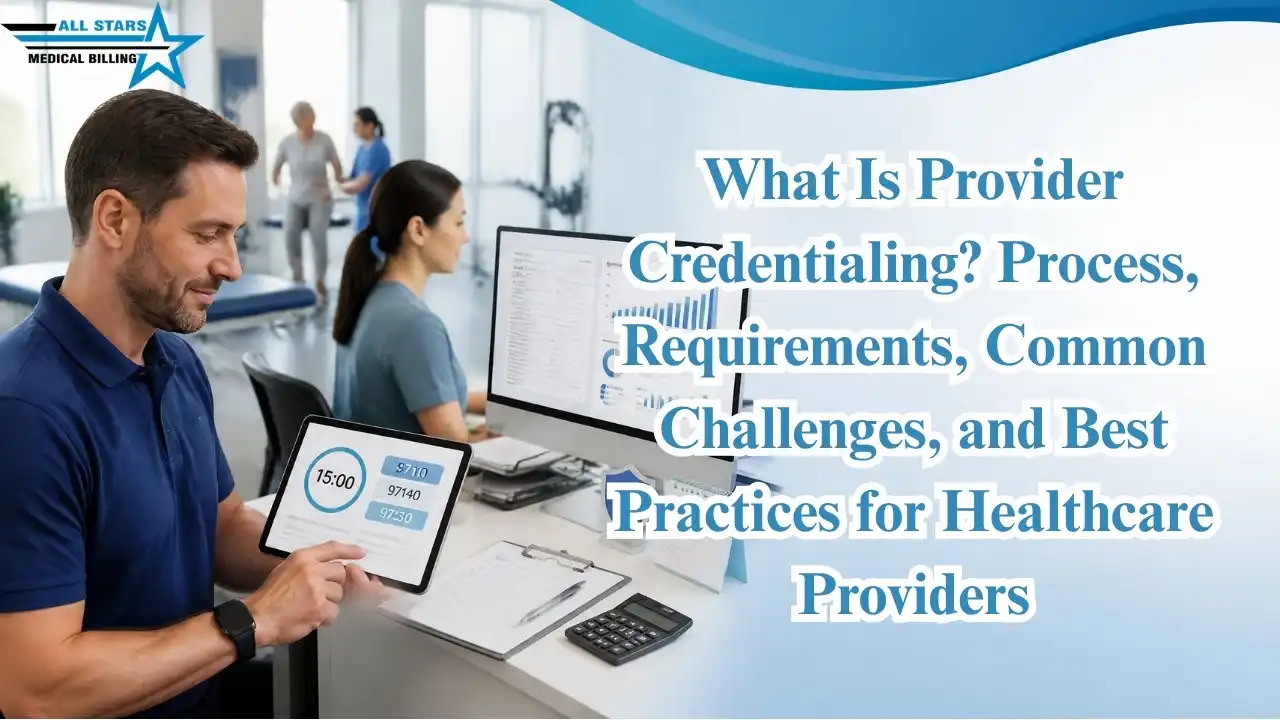
Provider Credentialing is the process that plays an instrumental role in the healthcare industry. This process guarantees that all providers, whether physicians, specialists, nurse practitioners, therapists, or any other type of healthcare professionals, satisfy the required requirements in order to deliver medical services and be reimbursed by insurance payers. Prior to adding a provider to the network or accepting claims, insurance companies, hospitals, and governmental healthcare programs validate their education, licenses, certifications, professional experience, and employment history.
Despite the fact that the process of credentialing may look administrative, it influences the issues of patient safety, regulation compliance, and financial performance of a healthcare practice. Any problems related to this process can cause inability to treat patients with insurance coverage, submit claims, or receive payments. That is why healthcare organizations use effective provider credentialing services in order to simplify the process of credentialing and optimize revenue cycle management.
Regardless of whether your healthcare practice is launching, employing additional providers, or joining new insurance networks, it is crucial to understand the whole process of provider credentialing.
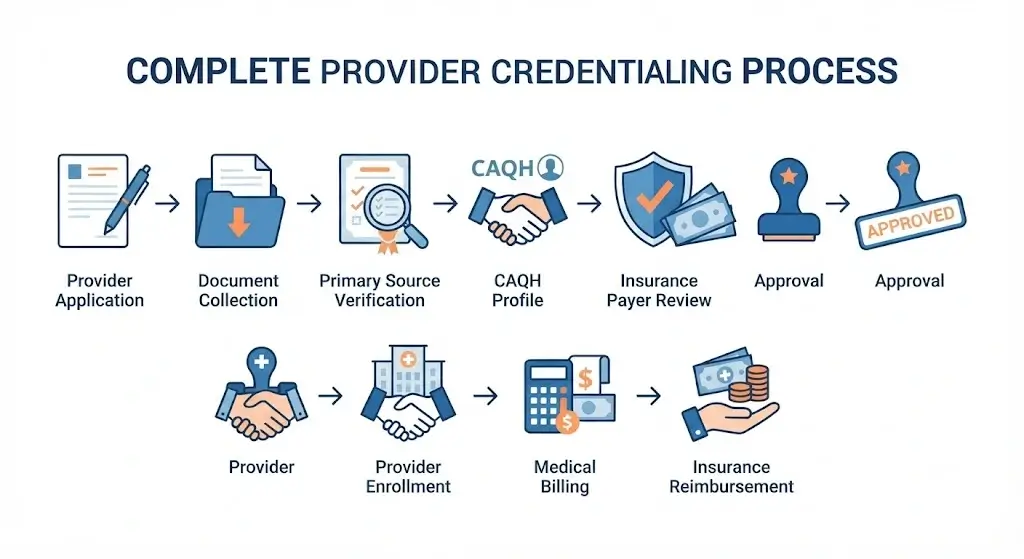
What Is Provider Credentialing?
Credentialing is an important activity because it makes sure that a provider is competent and meets all professional standards and regulatory requirements before delivering patient care and billing for his or her medical services to the insurance company.
A provider credentialing process usually involves checking of the following documents:
• Medical education
• Residency and fellowships
• State medical licenses
• Board certifications
• DEA registrations
• Professional liability insurance
• National Provider Identifier (NPI)
• Hospital privileges
• Employment history
• Professional references
• Malpractice claims history
• Exclusion and sanction databases
At the end of the process, the decision is made whether to allow the provider to join the health plan network.

Why Is Provider Credentialing Important?
Credentialing of providers is critical to patient protection, compliance, and good revenue cycle management. Without proper credentialing and enrollment of providers, healthcare practitioners are unable to join most health insurance organizations and claim compensation for medical services provided by them.
Improves Patient Safety
Credentialing helps confirm that healthcare providers possess the education, training, experience, and licenses required to deliver safe, high-quality patient care. Primary source verification helps identify disciplinary actions, license suspensions, sanctions, or malpractice concerns before a provider joins a healthcare organization or insurance network.
Supports Regulatory Compliance
Healthcare organizations must comply with credentialing standards established by government agencies, commercial insurance companies, and accreditation organizations. Maintaining accurate provider credentials helps practices meet regulatory requirements while reducing compliance risks and audit issues.
Prevents Revenue Delays
One of the biggest financial risks for healthcare providers is delayed credentialing. Providers generally cannot bill insurance companies until both credentialing and provider enrollment are complete. Delays may result in denied claims, postponed reimbursements, and significant revenue loss for medical practices.
Builds Trust with Insurance Companies
Insurance payers use credentialing to ensure providers meet professional standards before allowing them to participate in their networks. Accurate and timely credentialing strengthens relationships with insurance companies and supports faster claims processing.
Enhances Practice Growth
As healthcare practices expand by hiring physicians, nurse practitioners, physician assistants, or specialists, efficient credentialing helps new providers begin seeing patients sooner. Faster onboarding means increased patient access and quicker revenue generation.

How Provider Credentialing Supports Revenue Cycle Management
Provider credentialing is one of the initial steps in the development of a successful RCM approach. Insurance claims cannot be processed without provider credentialing and enrollment regardless of how good the medical billing and coding processes are performed.
Properly implemented provider credentialing will help healthcare organizations:
• Decrease claim denials
• Limit payment delays
• Enhance insurance payments
• Improve cash flow
• Fast track provider credentialing
• Ensure payer compliance
• Boost efficiency
This is why provider credentialing and medical billing are often combined by healthcare organizations.

How AllStars Medical Billing Simplifies Provider Credentialing
We at All Stars Medical Billing take great pride in offering extensive credentialing and Provider enrollment services for doctors, health care facilities, clinics, hospitals, and other specialties across the United States. Our competent credentialing professionals handle all aspects of the process from preparing documents to CAQH profile management and Medicare and Medicaid enrollments along with commercial insurance credentialing and provider enrollments.
By integrating our expertise in credentialing with state-of-the-art medical billing and revenue cycle management services, we assist healthcare organizations to save time, speed up insurance authorizations, eliminate billing issues and improve billings. Whether you have one provider to credential or many providers working in multiple specialties, we make your credentialing process seamless and hassle-free.
Conclusion
Credentialing of providers is not only about fulfilling certain administrative requirements; it is the backbone of any efficient health care organization. It confirms that the health care providers have all the credentials to be able to provide high-quality health care services according to all the professional, legal and ethical requirements. Credentialing ensures that the health care providers are able to get reimbursed for their work.
An efficient credentialing system will also help improve your revenue cycle management process as it will prevent you from making any billing mistakes, speed up the onboarding of the providers, and increase cash flow. With payer requirements getting stricter each day, it is crucial for the provider to be properly credentialled.
At AllStars Medical Billing, we offer all-inclusive provider credentialing and enrollment services that are designed to meet the needs of physicians, clinics, hospitals, and other health facilities across the US. Our services include CAQH profile management, credential maintenance and recredentialing, Medicare/Medicaid and commercial insurance enrollment. When combined with our expertise in medical billing and revenue cycle management, we help our clients minimize delays, maximize reimbursements, and concentrate on delivering top-notch patient care.
If you are setting up a new practice, hiring new providers, or entering new insurance networks, working with AllStars Medical Billing is what will make your credentialing process easy.
What are the most common credentialing challenges?
Common issues include:
Missing or expired documents
Incomplete CAQH profiles
Delayed responses from providers
Errors on applications
Slow payer processing
License or certification expirations
Inaccurate provider information
What is CAQH, and why is it important?
The Council for Affordable Quality Healthcare (CAQH) maintains a centralized provider database used by many insurance companies during credentialing. Keeping a CAQH profile complete and up to date can significantly speed up the credentialing process.
How does provider credentialing affect medical billing?
Credentialing directly impacts medical billing because insurance companies generally will not process or reimburse claims until a provider has been successfully credentialed and enrolled. Proper credentialing helps reduce claim denials, payment delays, and revenue loss.
Can a healthcare provider see patients before credentialing is complete?
Yes, a provider may see patients depending on the employer’s policies. However, they often cannot bill insurance under their own credentials until credentialing and payer enrollment are finalized. This may delay reimbursements.
How can AllStars Medical Billing help with provider credentialing?
AllStars Medical Billing provides end-to-end provider credentialing and enrollment services, including:
Medicare and Medicaid enrollment
Commercial insurance credentialing
CAQH profile setup and maintenance
NPI registration assistance
Recredentialing services
Provider enrollment tracking
Document preparation and submission
Ongoing credential management
Our experienced credentialing specialists help healthcare providers reduce delays, avoid application errors, accelerate insurance approvals, and improve revenue cycle performance so they can focus on delivering quality patient care.
How can I get started with AllStars Medical Billing’s credentialing services?
Getting started is simple. Contact AllStars Medical Billing with your provider information, and our credentialing specialists will guide you through document collection, application preparation, payer enrollment, CAQH management, and ongoing credential maintenance to ensure a smooth and efficient credentialing process.
Why should healthcare practices outsource provider credentialing?
Getting started is simple. Contact AllStars Medical Billing with your provider information, and our credentialing specialists will guide you through document collection, application preparation, payer enrollment, CAQH management, and ongoing credential maintenance to ensure a smooth and efficient credentialing process.