
Everything that a healthcare practice submits has one thing in common, getting the diagnosis codes right. The ICD-10 coding system forms the heart of documentation, billing, and reimbursement and the slightest mistake means that a claim will be denied, payment delayed, or there may be compliance issues. This guide outlines everything there is to know about ICD-10 coding, its structure, importance in revenue cycle management, and the most expensive mistakes to avoid in 2026.
What Is ICD-10 Coding?
The International Classification of Diseases version 10 (ICD-10) is an international standard to classify diseases, symptoms, injuries, and causes of death. The classification was developed by the World Health Organization to have a universal alphanumeric code assigned to each diagnosis in order to maintain uniformity in clinical documentation.
What is ICD-10-CM in the United States
The ICD-10-CM, or the International Classification of Diseases, Tenth Revision Clinical Modification, is utilized in the United States in order to code outpatient and physician diagnoses. The ICD-10-CM is the version of the code set which has been modified by the National Center for Health Statistics from the CDC specifically for use within the outpatient setting.
How Does ICD-10-CM Code Work?
ICD-10-CM code is a 3 to 7 character long coding system that starts with a letter and is followed by numbers:
- 1st character: letter denoting the category (e.g. “J” stands for respiratory diseases)
- 2nd and 3rd character: the numeric subcategory
- 4th-6th character: additional information regarding etiology, anatomical location, severity
- 7th character (when necessary):encounter code (initial, subsequent, sequela)
Thus, code S72.001A denotes a fracture of the right femur, initial encounter, specific enough for proper documentation and billing.
ICD-10 vs CPT – What Are The Differences?
The ICD-10 and CPT codes are used to complement each other. However, they represent different aspects. The ICD-10 codes provide the reason for visiting the physician (diagnosis). The CPT codes give the description of what was performed (procedure or service). It is usual practice to use both ICD-10 and CPT codes in one claim. The latter code must be medically justified by the former.
Why ICD-10 Code Importance to Medical Billing?
ICD-10 codes will determine if claims are paid, delayed, or denied. Apart from being essential to claims processing, ICD-10 coding helps to document medical necessity, report quality measures, risk adjusters for value-based payments, and more public health information. Bad ICD-10 coding can have more consequences than revenue loss.
Major Effects of ICD-10 Coding on Claiming and Payment Process
ICD-10 codes help payers determine if the care rendered is medically necessary and then they process the payment. An imprecise code, irrelevant code, or lack of specificity may lead to denial of payment or request for more documentation – causing delay in the whole revenue cycle process.

10 Common ICD-10 Coding Mistakes That Could Lead to Claim Denials
- Choice of Wrong Codes Choosing the wrong ICD-10-CM code to use in coding the diagnosis will most likely lead to claims rejections or denials. Common Denial code:CO-11 – Diagnosis is inconsistent with the procedure/service.
- Inaccurate Specificity Use of a general or unspecified code while the documentation points out a specific diagnosis could lead to coding and medical necessity problems. Common Denial code: CO-11 – Diagnosis code is inconsistent with the procedure/service.
- Laterality Errors Choosing the wrong side (right instead of left) or omitting reporting of conditions that are on both sides could result in inconsistency between the documentation and the claims. Common Denial code: CO-16 Diagnosis is inconsistent with the service billed.
- Absence of Documentation When a condition is coded without adequate documentation from the provider in the record could raise questions about medical necessity. Common Denial code: CO-16 Claim/service lacks information.
- Incorrect Diagnosis Coding Sequencing Order of diagnoses coded could affect payer determination of the reason for the visit and the medical necessity of the service rendered. Common Denial code:CO-11 Diagnosis is inconsistent with the procedure/service.
- Excludes1/Excludes2 Errors Ignoring ICD-10-CM Excludes1 and Excludes2 guidelines may create code combinations that are either incompatible or incorrect. Denial code: CO-16 Incorrect/Missing Information
- Application of Unspecified Codes When a More Specific Code Is Appropriate If there is sufficient detail in the medical record to justify the assignment of a more specific code instead of an unspecified one, this will likely create denial of the claim due to either medical necessity edits or coding edits. Denial code:CO-11 – Diagnosis Not Consistent With Procedure/Service,
- Mismatch Between ICD-10-CM Diagnosis and CPT/HCPCS Procedure/Service The ICD-10-CM diagnosis code must support the medical necessity of the procedure/service. The absence of this connection between the two codes results in the determination by the payor that the procedure/service is not supported by the diagnosis. Denial code:CO-11 – Diagnosis Not Consistent With Procedure/Service.
- Usage of an Invalid ICD-10-CM Code Using a deleted, revised, or otherwise invalid code for a given fiscal year can cause rejection or denial of the claim. Denial code: CO-16 Information Missing/Incorrect; the invalid code may be detected specifically by payer edits.
- Not Following Annual ICD-10-CM Update ICD-10-CM codes and official coding guidelines are annually updated. Not following changes in ICD-10-CM codes or coding guidelines can result in incorrect information being submitted. Denial code: CO-16: Information Missing/Incorrect.
How to Choose the Correct ICD-10-CM Code
- Begin with the physician’s documentation; do not assume anything.
- Search the Alphabetic Index to find an initial code, but confirm it in the Tabular List.
- Check for necessary 7th characters and combination codes.
- Note any Includes, Excludes1, and Excludes2.
- Assign the most specific code that documentation allows.
- Confirm the sequence based on payment type and encounter.
How Does Proper ICD-10 Coding Minimize Claim Rejections?
Coding of proper details decreases two primary reasons for claim rejection – specificity errors and medical necessity issues. When diagnoses are adequately detailed during documentation, coding process and when linked to the correct procedure being billed, claims get processed by payers with minimum holds, rejections, and need for additional information.
Relationship between ICD-10 Coding and Revenue Cycle Management
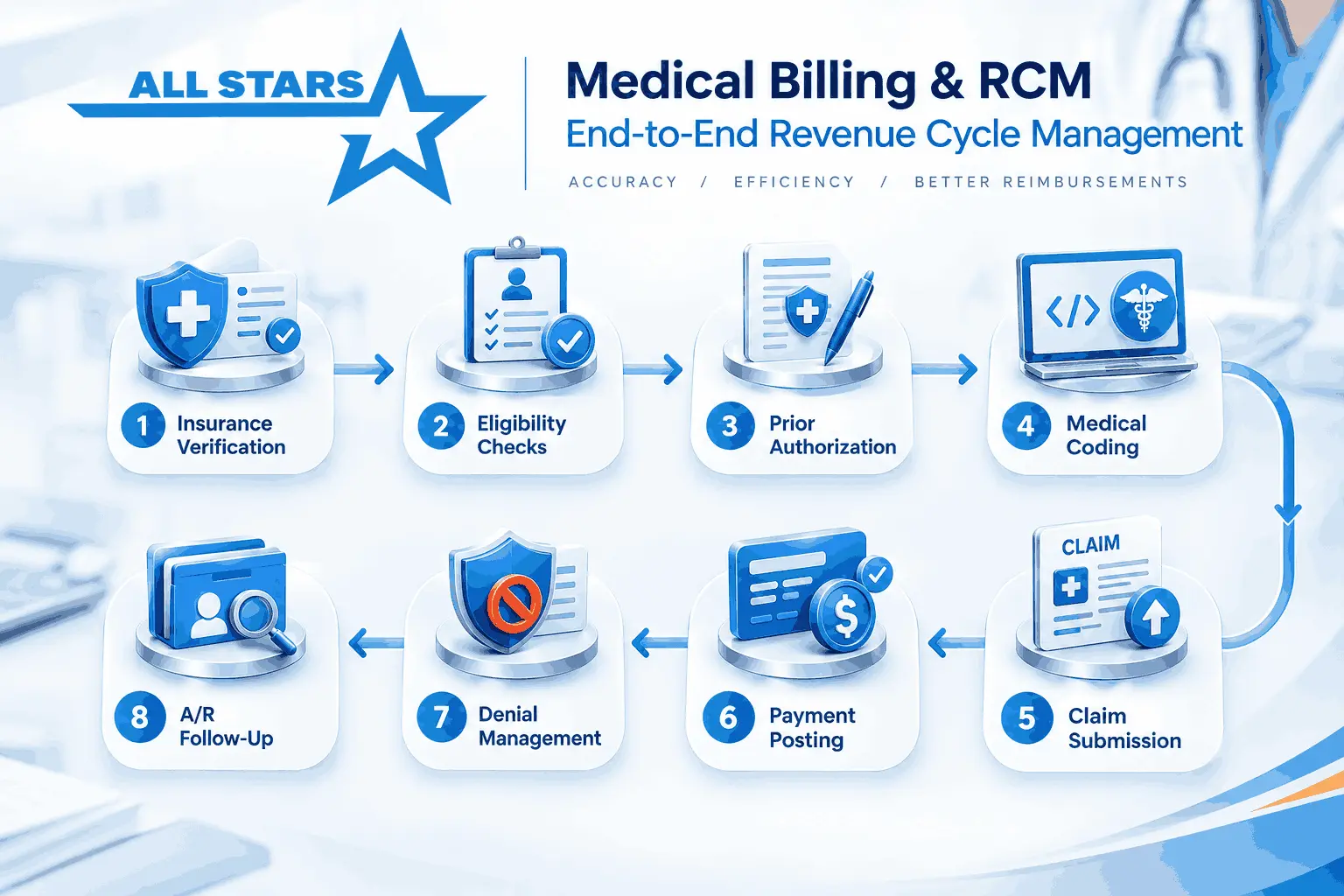
Proper coding is not just a compliance issue but also relates to effective revenue cycle management. Problems with coding create problems at subsequent stages of the revenue cycle such as denials, A/R delays, and increased days in A/R. The organizations which incorporate coding into their RCM strategy have better results.
In Which Instances Should ICD-10 Coding be Outsourced for a Practice?
A practice should outsource its coding needs if it experiences increasing denial rates, difficulty keeping pace with yearly code changes, inability to hire certified coders, or is expanding quicker than its billing department can manage. Specialty-specific coding such as oncology, orthopedics, or behavioral health are the ones that will benefit the most from outsourcing to coders who code only in complex code sets.
Best Practices for ICD-10 Coding by Healthcare Providers
- Physician training on documentation to assist specific coding
- Internal coding audits regularly
- Monthly analysis of payer-specific denial trends
- Template and superbills updated with each ICD-10 release
- Using certified coders (CPC, CCS) for complex specialties
- Feedback loop between coders and physicians
How frequently is ICD-10-CM updated?
Annually, starting from October 1, with some mid-year updates in April.
Who gives out the ICD-10 codes?
Certified coders, according to the notes written by doctors, not the doctors themselves usually.
What are the consequences of choosing the wrong ICD-10 code?
Claim denial, undercoding, delayed processing due to further documentation or audits.
Is ICD-10-CM the same around the world?
No. Each country has its own version of clinical modification of the ICD-10 classification developed by the WHO.
ICD-10 codes are not merely a regulatory requirement; rather, they are crucial for effective reimbursements and billing. Now that the FY 2026 updates have come into effect, by staying updated with changes to codes and compliance requirements, you will be safeguarding your income and minimizing your risks of rejection.
If you find yourself dealing with denials, obsolete codes, or coding delays, let AllStars Medical Billing assist you with these issues. The professional coders at AllStars Medical Billing will help you with ICD-10-CM coding precision, claims scrubbing, and revenue cycle management.