
Laboratory services are an important part of hospital and outpatient healthcare billing. Accurate reporting of laboratory services helps healthcare organizations submit clean institutional claims, reduce denials, and improve reimbursement.
Revenue Code 0300 is used for Laboratory, General Classification on institutional claims. It belongs to the 030X laboratory revenue-code series, which includes more specific categories such as chemistry, immunology, hematology, bacteriology and microbiology, urology, and other laboratory services.
What Is Revenue Code 0300?
Revenue Code 0300 is an institutional claim revenue code that identifies laboratory services under the general laboratory classification.
The 030X series includes:
| Revenue Code | Laboratory Service |
|---|---|
| 0300 | Laboratory – General Classification |
| 0301 | Chemistry |
| 0302 | Immunology |
| 0303 | Renal Patient – Home |
| 0304 | Non-Routine Dialysis |
| 0305 | Hematology |
| 0306 | Bacteriology & Microbiology |
| 0307 | Urology |
| 0309 | Other Laboratory |
CMS identifies 0300 specifically as Laboratory – General Classification.
Revenue Code 0300 should therefore not automatically be treated as the code for every laboratory test. When a more specific revenue classification applies, the appropriate 030X code may be reported instead, depending on the payer’s billing requirements.
What Does Revenue Code 0300 Represent?
Revenue Code 0300 represents the general laboratory category on an institutional claim.
It helps the payer identify the department or type of service associated with the charge. However, the revenue code alone generally does not provide the complete clinical description of the laboratory test.
Laboratory billing may also involve:
- CPT codes
- HCPCS codes
- ICD-10-CM diagnosis codes
- Units
- Charges
- Modifiers, when applicable
- Date of service
- Ordering or referring provider information
- Medical necessity information
The exact reporting requirements can vary by payer and claim type.
When Is Revenue Code 0300 Used?
Revenue Code 0300 may be used when laboratory services are reported under the general laboratory classification on an institutional claim.
For example, a hospital outpatient claim may contain:
Revenue Code: 0300
Description: Laboratory – General Classification
Units: 1
Charge: $125.00
Procedure Code: Applicable CPT/HCPCS code
Diagnosis: Applicable ICD-10-CM code
The actual revenue code selected should match the service and the payer’s billing rules.
For Medicare, CMS maintains specific laboratory billing guidance and identifies laboratory services as part of its clinical laboratory billing resources.
Revenue Code 0300 and the UB-04 Claim Form
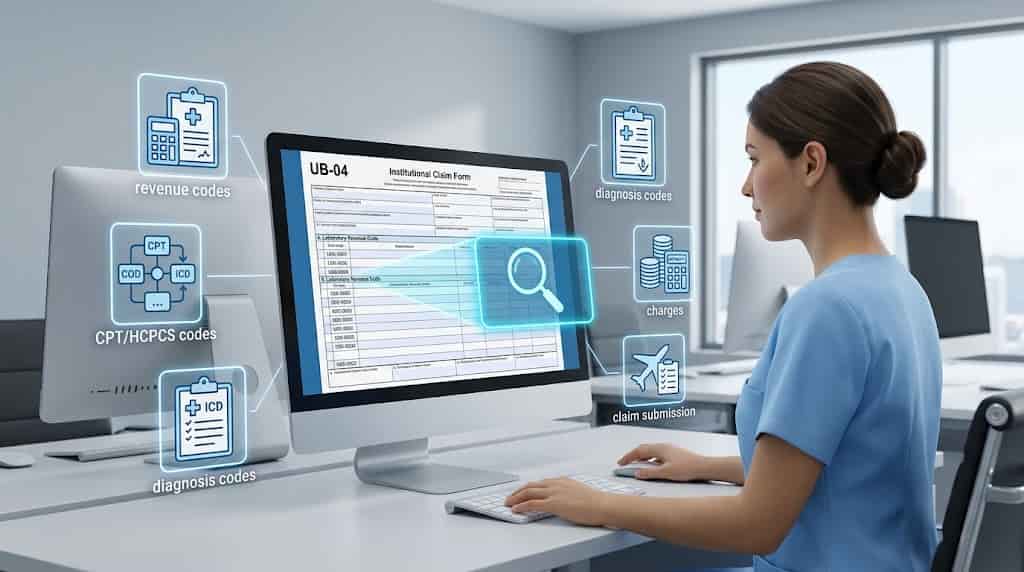
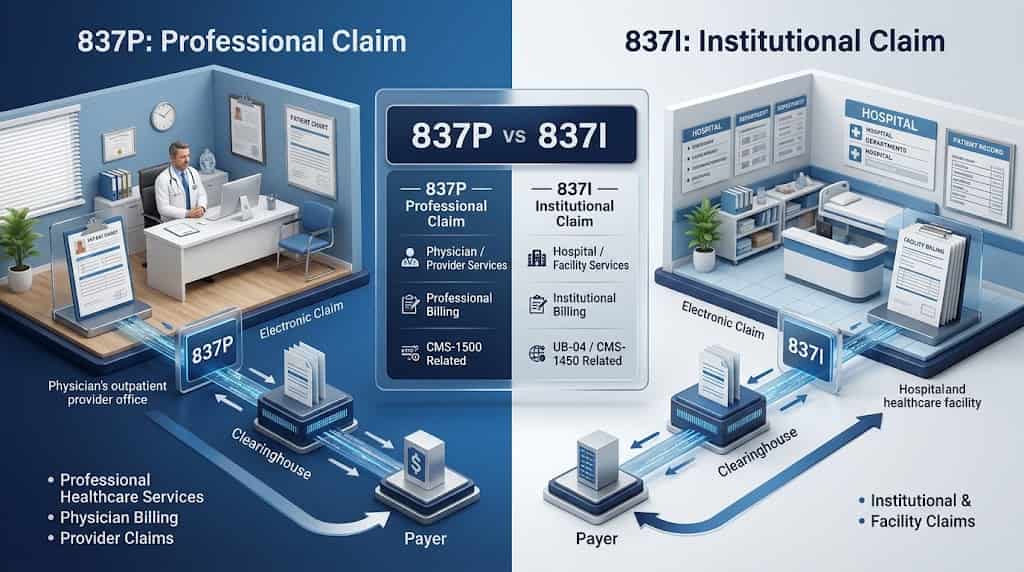
Revenue codes are primarily associated with institutional billing, including claims submitted using the UB-04/CMS–1450 claim form.
On an institutional claim, revenue-code information is used to organize services and charges by revenue center.
A simplified laboratory claim example may look like this:
| Claim Element | Example |
| Revenue Code | 0300 |
| Service | Laboratory |
| CPT/HCPCS | Applicable laboratory procedure code |
| Units | 1 |
| Charge | $125.00 |
| Diagnosis | Applicable ICD-10-CM |
| Place of Service/Facility | Hospital outpatient |
| Claim Type | Institutional |
The UB-04 revenue-code structure also contains specific laboratory categories such as 0301 Chemistry, 0302 Immunology, 0305 Hematology, and 0306 Bacteriology & Microbiology.
Why Is Revenue Code 0300 Important?
Accurate use of Revenue Code 0300 can help healthcare organizations maintain consistent claim reporting and reduce billing discrepancies. When laboratory charges are incorrectly classified, the claim may require additional review or correction, potentially delaying reimbursement. Proper revenue-code selection should therefore be part of the organization’s overall claim-review process.
Revenue Code 0300 and Laboratory Billing
Laboratory billing involves several pieces of information that must work together. The revenue code identifies the general service category, while CPT or HCPCS codes provide details about the specific laboratory procedure. Diagnosis codes can also be important because they communicate the clinical reason for the service and may support medical necessity.
For example, a hospital outpatient claim may contain a laboratory revenue code, a specific laboratory procedure code, applicable diagnosis information, units, and charges. These elements should be reviewed together before claim submission rather than treating Revenue Code 0300 as a standalone billing code.
The Role of Accurate Coding
Accurate coding is an important part of laboratory revenue cycle management. A coding error can affect claim processing, reimbursement, and denial rates. Billing teams should compare the laboratory service actually performed with the documentation and codes reported on the claim.
Regular coding audits can also help identify repeated problems. If the same type of error appears across multiple claims, the organization can investigate the underlying workflow and implement corrective measures.
Laboratory Billing and Claim Denials
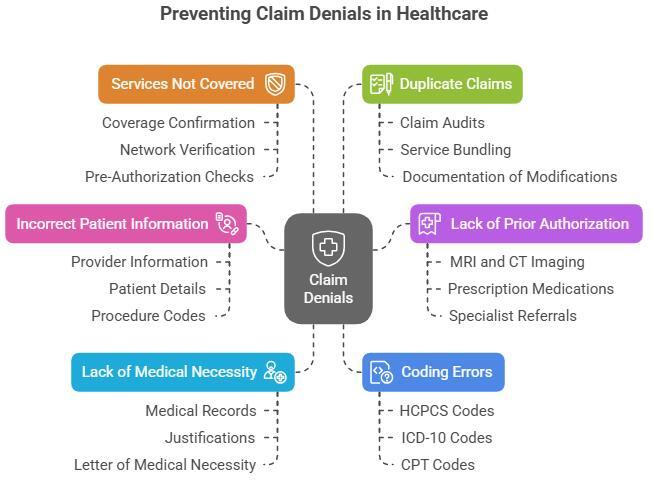
Laboratory claims can experience denials for reasons that extend beyond the revenue code itself. Eligibility issues, incorrect procedure codes, missing information, medical-necessity requirements, authorization problems, duplicate billing, and payer-specific rules can all affect claim processing.
For this reason, denial management should focus on identifying the root cause rather than simply correcting individual claims. Tracking denial categories over time can help billing teams determine which problems are most frequent and which require workflow changes.
Revenue Code 0300 and Revenue Cycle Management
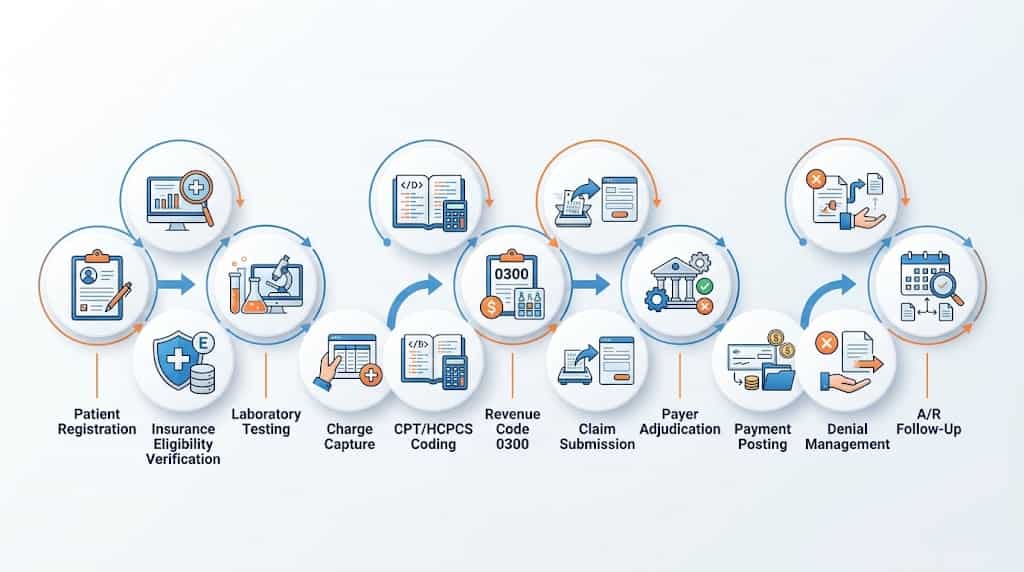
Laboratory services can generate a significant volume of claims for hospitals, diagnostic facilities, and other healthcare organizations. Even a relatively small percentage of rejected or denied claims can create additional work for billing staff and increase outstanding accounts receivable.
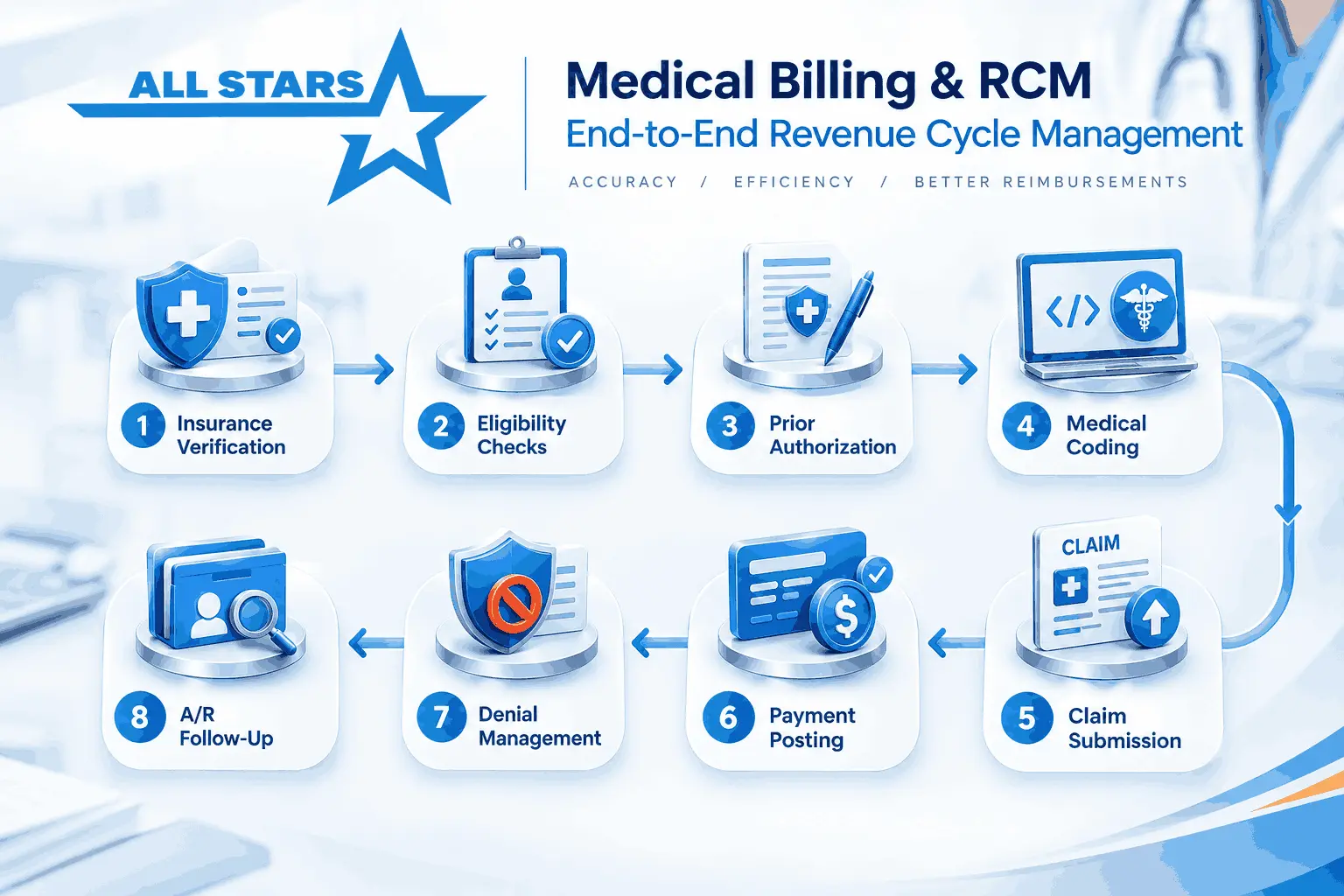
A strong revenue-cycle process connects eligibility verification, coding, claim submission, denial management, payment posting, and A/R follow-up. This approach allows organizations to identify problems earlier and improve the overall efficiency of laboratory billing.
Example of Laboratory Billing Impact
Consider a facility that submits 2,000 laboratory claims each month. If the average claim has an allowed amount of $85, the potential monthly allowed revenue represented by those claims would be approximately $170,000.
If 6% of those claims require correction or experience a denial, approximately 120 claims could require additional attention. Even when each issue is eventually resolved, the billing team may spend considerable time researching, correcting, resubmitting, and following up on those claims.
This is an illustrative example rather than an industry benchmark.
How Professional Medical Billing Support Helps
Outsourcing laboratory billing support can provide healthcare organizations with additional expertise in claim preparation, coding review, denial management, and A/R follow-up. A professional billing team can also monitor recurring denial patterns and identify opportunities to improve the billing workflow.
For organizations handling large laboratory claim volumes, consistent monitoring can be particularly valuable because small process improvements can have a meaningful effect when applied across hundreds or thousands of claims.
Is Revenue Code 0300 a CPT Code?
No. Revenue Code 0300 is not a CPT code. Revenue codes classify the type of service or revenue center, while CPT and HCPCS codes identify the specific procedure or service performed.
Where Is Revenue Code 0300 Reported?
Revenue Code 0300 is generally reported on institutional claims, including claims submitted using the UB-04/CMS-1450 claim format.
What Is the Difference Between Revenue Code 0300 and 0301?
Revenue Code 0300 represents the general laboratory classification, while 0301 specifically represents Chemistry laboratory services. The appropriate revenue code should be selected based on the service and applicable payer requirements.
How Can Providers Prevent Revenue Code 0300 Errors?
Providers can reduce errors by verifying eligibility, reviewing laboratory orders, selecting accurate CPT/HCPCS and diagnosis codes, checking revenue codes, validating units and charges, following payer requirements, and performing claim audits.
Why Is Laboratory Billing Accuracy Important?
Accurate laboratory billing helps healthcare organizations submit cleaner claims, reduce avoidable errors, improve reimbursement processes, and maintain better control over accounts receivable.
Revenue Code 0300 is one component of the laboratory billing process. Successful laboratory claim submission requires coordination between revenue codes, CPT/HCPCS codes, diagnosis codes, documentation, payer requirements, and claim-processing procedures. By combining accurate coding with proactive eligibility verification, claim review, denial prevention, and A/R management, healthcare organizations can build a more efficient laboratory revenue cycle.